

Table of Contents
Introduction
If you are considering dental implants in Brampton, one of the first questions you will probably have is simple: How much will dental implants cost?
The difficult part is that there is no single price that applies to every patient.
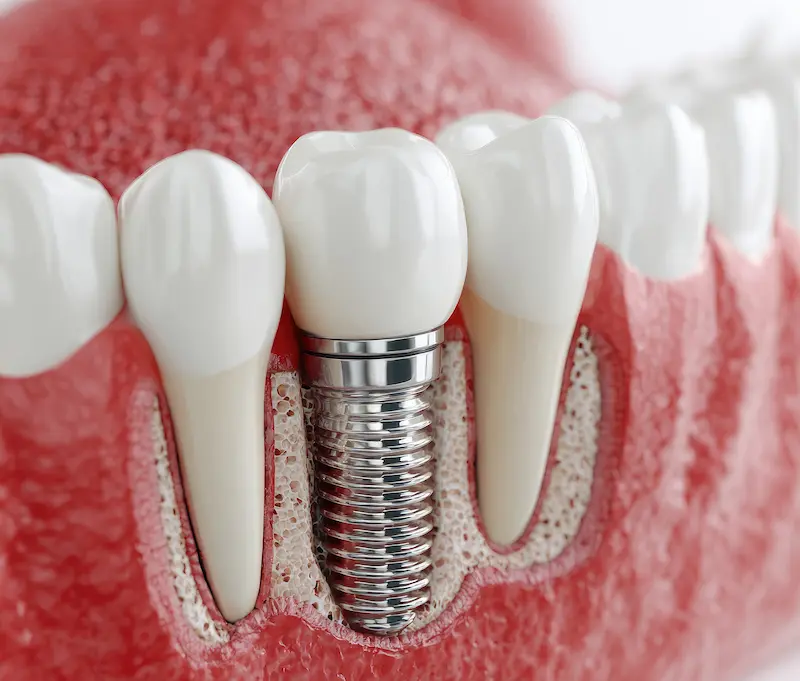
A dental implant is not simply one item that is placed in your mouth. Depending on your situation, treatment can involve an examination, diagnostic imaging, implant placement, an abutment, a crown or another restoration, and sometimes additional procedures such as a tooth extraction or bone graft.
The number of missing teeth and the type of restoration you need can also significantly change the overall treatment plan.
That is why two patients can receive very different dental implant estimates even when both are replacing a single missing tooth.
In this guide, we explain what goes into the cost of dental implants in Brampton, which procedures can increase the total, how insurance works, what to ask for in a treatment estimate, and why the cheapest quote is not always directly comparable to another quote.
What Is Included in the Cost of a Dental Implant?
Before comparing prices, it is important to understand what a complete implant treatment may involve.
A typical single-tooth implant can involve several stages:
- Initial examination and treatment planning
- Diagnostic imaging
- Tooth extraction, if required
- Bone grafting, if required
- Implant placement
- Healing and follow-up appointments
- Abutment placement
- Custom dental crown
- Ongoing maintenance and aftercare
Not every patient needs every step.
For example, someone with a recently extracted tooth and sufficient healthy bone may have a simpler treatment plan than someone who has experienced significant bone loss and requires grafting before an implant can be placed.
This is one of the main reasons a dental implant should be priced as a complete treatment plan rather than as a single component.
How Much Do Dental Implants Cost in Brampton?
Dental implant costs in Brampton vary depending on the treatment required.
Revita Dentistry’s current dental implant service page provides a general single-implant range, but the clinic also notes that the cost depends on factors such as the number of implants, bone grafting and the type of restoration.
Rather than assuming that a quoted price applies to every patient, it is important to ask what the estimate includes.
For example, one quote may include:
- Implant placement
- Abutment
- Crown
- Imaging
- Follow-up care
while another may list only the implant placement and charge separately for the restoration.
The most useful comparison is therefore not simply the total number on the estimate. It is what that number includes.
For an accurate estimate, an implant dentist needs to assess your oral health, the location of the missing tooth, available bone and the type of restoration required.
8 Factors That Affect Dental Implant Cost in Brampton
1. The Number of Implants You Need
Replacing one missing tooth is different from replacing several teeth or an entire arch.
A single missing tooth may require one implant and a crown.
If multiple adjacent teeth are missing, your dentist may discuss options such as multiple individual implants or an implant-supported bridge.
For patients who have lost most or all of the teeth in an arch, the treatment plan can be considerably different again. Revita currently offers single-tooth and full-arch implant options, including implant-supported solutions.
The number and positioning of implants therefore have a direct effect on the treatment plan and overall cost.
2. The Type of Restoration
The implant itself is only one part of the finished tooth.
Once the implant has integrated with the jawbone, it needs to support a restoration.
Depending on your situation, this may be:
- A single dental crown
- An implant-supported bridge
- An implant-supported denture
- A full-arch fixed restoration
A single implant crown and a full-arch restoration are very different treatments, so they should not be compared using the same price expectations.
3. Whether You Need Bone Grafting
Healthy, adequate bone is important for implant placement.
After a tooth is lost, the surrounding jawbone can gradually change. Some patients may therefore need bone augmentation before or as part of implant treatment.
Bone grafting adds another procedure, materials and healing time to the treatment process.
Not everyone needs it.
Your dentist can determine whether there is enough bone for the planned implant by examining your mouth and using appropriate imaging.
4. The Imaging and Treatment Planning Required
Implant treatment requires careful planning.
Revita’s current implant service page describes comprehensive evaluation using 3D imaging and digital scans to assess the jawbone and plan treatment.
Imaging can help your dental team evaluate factors such as:
- Bone volume
- Tooth and root anatomy
- The position of nearby structures
- Implant location
- The planned restoration
The type and amount of diagnostic imaging needed will depend on the individual case.
5. Tooth Extraction or Other Preliminary Treatment
Sometimes the tooth being replaced is already missing.
In other situations, the tooth may still be present but cannot be predictably restored.
If an extraction is necessary before implant placement, that procedure can become another part of the treatment plan.
Other dental conditions may also need to be addressed before implant surgery.
For example, your dentist may recommend treating active gum disease or other oral health problems before proceeding.
This is important because implant treatment should be planned around your overall oral health rather than treated as an isolated procedure.
6. The Location of the Missing Tooth
The position of the missing tooth can affect treatment planning.
A front tooth may have particularly important cosmetic considerations because the restoration needs to work with your smile and surrounding gum tissue.
A back tooth has different functional demands because it is involved heavily in chewing.
The location can therefore influence the type of restoration and the planning required.
7. The Type of Implant and Materials Used
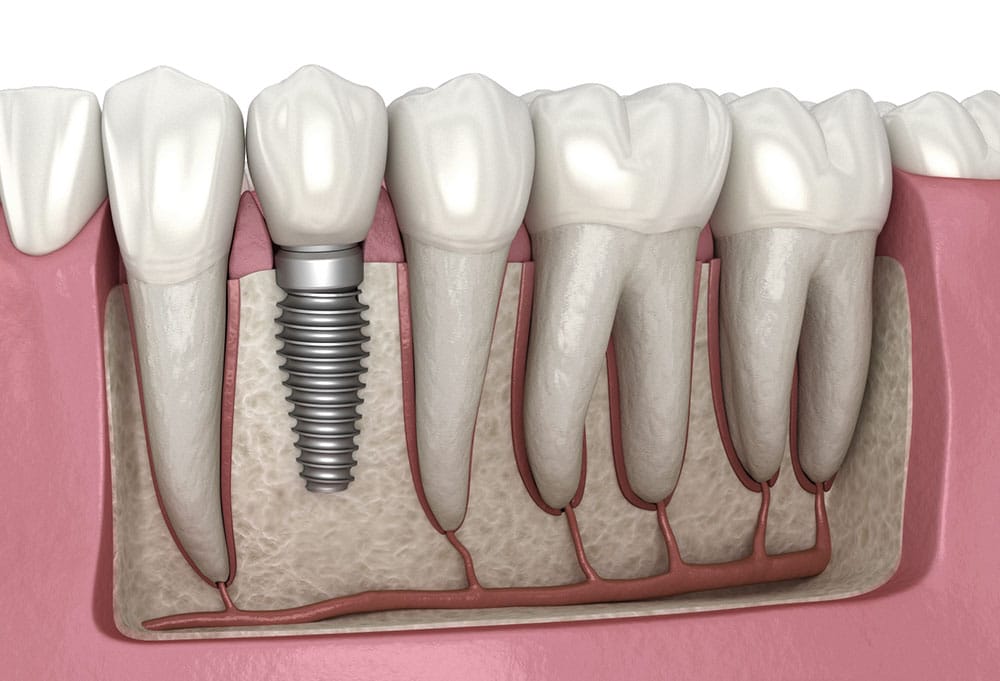
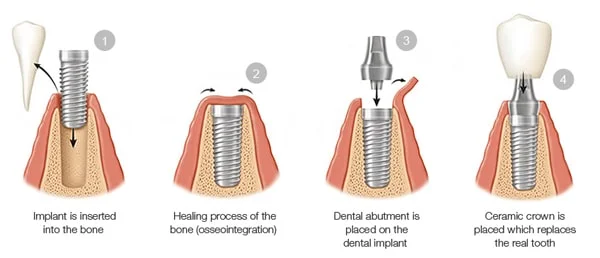
Implant treatment involves several components, including the implant fixture, abutment and final restoration.
The materials and components selected can vary depending on your clinical situation and the restoration being planned.
The final treatment cost should therefore be considered as a complete package rather than judging the implant fixture alone.
8. Follow-Up and Aftercare
Implant treatment does not end when the implant is placed.
Healing appointments and follow-up assessments may be necessary during the process.
Once the restoration is completed, regular dental care remains important.
Good home care and professional dental visits can help maintain the health of the implant and the surrounding gums.
When discussing an estimate, ask which follow-up appointments are included and which may be billed separately.
Why One Dental Implant Quote Can Be Different From Another
Suppose you contact two dental offices and receive two very different estimates.
That does not necessarily mean one office is overcharging or that the other is offering the same treatment for less.
The estimates may simply include different things.
For example:
Estimate A
- Implant placement
- Abutment
- Crown
Estimate B
- Examination
- 3D imaging
- Extraction
- Bone graft
- Implant placement
- Abutment
- Crown
- Follow-up care
Those are not equivalent treatment plans.
When comparing dental implant costs, always ask:
“Does this estimate include everything required to complete my treatment?”
That single question can make price comparisons much more meaningful.
Does the Canadian Dental Care Plan Cover Dental Implants?
This is especially important for Brampton patients considering implant treatment.
Under the current 2026 CDCP Dental Benefits Guide, implants and implant-related procedures are excluded from coverage. The guide specifically lists implants, bone grafts and implant-related procedures among services that are not covered.
This means you should not assume that being eligible for the Canadian Dental Care Plan means your dental implant treatment will be covered.
The CDCP does cover a range of other dental services, including examinations, X-rays, certain periodontal services, fillings, some crowns and dentures, subject to eligibility, frequency limitations and other plan rules.
Because CDCP rules can change, patients should confirm their current coverage before treatment.
Can You Finance Dental Implants?
Because implant treatment can involve several stages, some patients may prefer to spread payments over time.
Financing availability depends on the dental office and the financing provider.
Before agreeing to a financing arrangement, make sure you understand:
- Total treatment cost
- Initial payment
- Payment schedule
- Interest rate, if applicable
- Financing period
- Any administration fees
- What happens if treatment changes
A financing plan does not reduce the actual cost of treatment. It changes how the cost is paid over time.
What Should Be Included in a Dental Implant Estimate?
Before beginning treatment, ask for a written treatment plan that clearly explains what you are paying for.
A detailed estimate may identify:
- Consultation or examination fees
- Diagnostic imaging
- Extraction fees
- Bone grafting, if required
- Implant placement
- Implant components
- Abutment
- Crown or other final restoration
- Sedation, if applicable
- Follow-up appointments
- Laboratory fees
- Aftercare
The Royal College of Dental Surgeons of Ontario recommends clear communication about treatment costs and notes that estimates for complex treatment should account for additional expenses and possible unforeseen circumstances.
If you receive a quote, ask the dental team to explain anything you do not understand before agreeing to treatment.
Questions to Ask Before Choosing a Dental Implant Provider
Cost is important, but it should not be the only thing you compare.
Before starting treatment, consider asking:
What exactly is included in the quoted price?
Find out whether the implant, abutment, crown, imaging and follow-up care are included.
Will I need a bone graft?
If so, ask how it changes the treatment timeline and cost.
How many appointments will I need?
Implant treatment is normally completed in stages, so understanding the expected timeline can help you plan.
What type of restoration will I receive?
Ask whether the final tooth will be a crown, bridge, denture or full-arch restoration.
What happens if additional treatment becomes necessary?
Ask how unexpected findings or changes to the treatment plan will be handled financially.
Can you provide an insurance estimate?
If you have private dental insurance, ask whether the office can submit a predetermination so you can understand your expected benefits.
What aftercare is included?
Ask about follow-up appointments and what happens if you have concerns during healing.
Is a Dental Implant Worth the Cost?
There is no universal answer because the right treatment depends on the individual patient’s oral health, goals and alternatives.
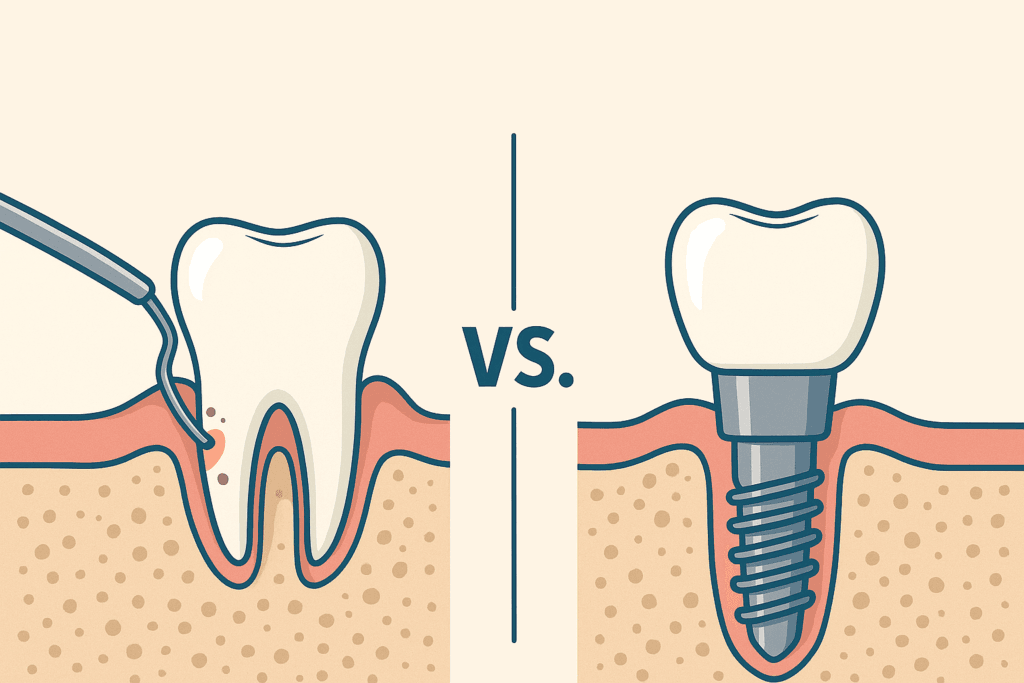
Dental implants can provide a fixed way to replace missing teeth and can be used to support crowns, bridges and implant-supported dentures.
However, they are not automatically the right choice for every patient.
Your dentist may discuss other options depending on your situation, including:
- Traditional bridges
- Partial dentures
- Complete dentures
- Implant-supported restorations
The decision should consider more than the initial price.
Your dentist can explain the advantages, limitations, expected maintenance and long-term considerations of each appropriate option.
How to Reduce Unexpected Dental Implant Costs
You cannot always predict every part of treatment before your mouth has been assessed, but you can reduce financial surprises by asking the right questions early.
Start with a comprehensive assessment
A proper examination and appropriate imaging help establish what treatment is actually required.
Ask for a complete treatment plan
Make sure the estimate covers the entire planned process rather than only the implant placement.
Ask about additional procedures
Find out whether extraction or bone grafting may be required.
Check your insurance before treatment
Do not assume that your insurer will cover the same portion of treatment that you expect.
Ask about financing
If the full treatment cost is difficult to pay at once, ask whether financing options are available.
Get your questions answered before surgery
Once treatment begins, changes may become necessary depending on clinical findings. Discussing possible additional costs beforehand can make the process more predictable.
Dental Implant Cost in Brampton: What Should You Expect?
The most important thing to understand is that there is no single dental implant price for every patient in Brampton.
Your total cost can depend on:
- Number of implants
- Type of restoration
- Bone availability
- Bone grafting requirements
- Tooth extraction
- Diagnostic imaging
- Implant components
- Laboratory costs
- Sedation needs
- Follow-up care
- Insurance benefits
- Financing arrangements
A lower advertised price may also represent only one part of the treatment.
Instead of asking only, “How much is a dental implant?”, ask:
“What will my complete treatment cost, and what is included?”
That gives you a much clearer basis for comparing treatment options.
Dental Implants in Brampton at Revita Dentistry
Revita Dentistry provides dental implant treatment in Brampton for patients replacing one or more missing teeth.
The current implant service includes treatment planning with digital imaging and scans, implant placement, healing and follow-up, and restoration with a crown or other appropriate implant-supported solution.
If you are considering dental implants in Brampton, an assessment is the best way to determine whether implants are appropriate for your situation and what your treatment may involve.
During your consultation, you can ask about the recommended treatment, expected timeline, estimated cost, insurance considerations and available payment options.
Revita Dentistry is located at 10 Beaumaris Drive, Unit 12, Brampton, Ontario.
Frequently Asked Questions
The cost varies depending on the number of implants, restoration type, bone grafting, imaging and other treatment needs. A personalized assessment is required to determine the appropriate treatment plan and estimate.
No. Under the current 2026 CDCP Dental Benefits Guide, implants and implant-related procedures are excluded from coverage.
Not necessarily.
A complete implant restoration commonly involves an implant fixture, an abutment and a final restoration such as a crown, but the way treatment is packaged and billed can vary. Always ask what is included in your estimate.
Financing may be available for eligible patients depending on the dental office and financing provider. Ask about the total cost, payment schedule and any interest or fees before agreeing to financing.
Not everyone needs one.
Whether grafting is recommended depends on the amount and condition of the available bone and the planned implant treatment