
Dental Crowns and Bridges in Brampton
A damaged or missing tooth can make everyday eating, speaking, and smiling more difficult. Dental crowns and bridges in Brampton can help restore damaged teeth or replace missing teeth when these treatments are appropriate for your oral health.
A crown generally restores an existing tooth that has been significantly weakened or damaged. A bridge replaces one or more missing teeth by filling the space with a fixed restoration. At Revita Dentistry, your dentist can examine your teeth, gums, bite, and overall oral health before explaining which treatment options may be suitable for you.
What Is a Dental Crown?
A dental crown is a custom-made restoration designed to fit over a prepared tooth. It can restore the tooth’s shape, function, and appearance when significant damage has affected its structure.
A dentist may consider a crown when a tooth has been affected by:
- Significant decay
- A crack or fracture
- A large filling
- Dental trauma
- Loss of substantial tooth structure
- Certain situations following root canal therapy
A crown provides more coverage than a conventional filling. However, more coverage does not automatically mean a crown is the right choice. If a tooth can be predictably restored with a more conservative treatment, such as a filling, your dentist may recommend that option instead.
What Is a Dental Bridge?
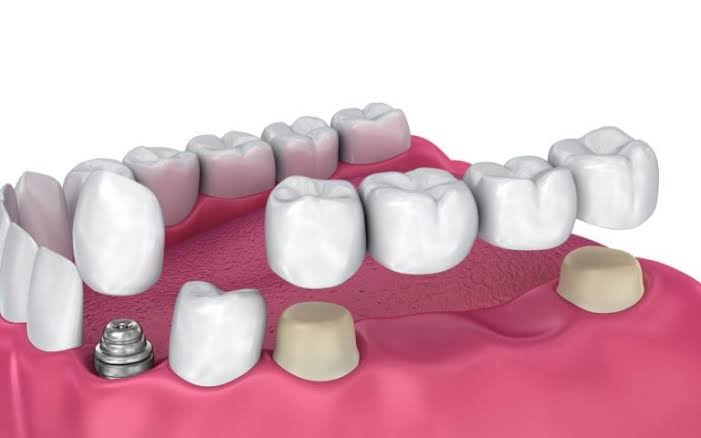
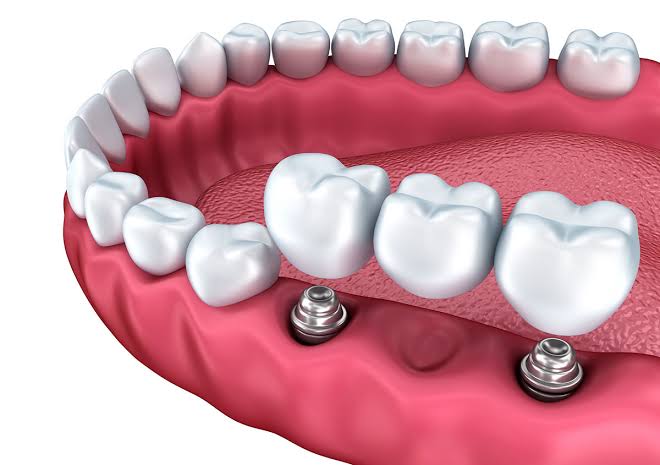
A dental bridge is a fixed restoration used to replace one or more missing teeth. The replacement tooth, called a pontic, occupies the space left by the missing tooth.
Depending on the design, a bridge can be supported by neighbouring natural teeth or dental implants. The supporting structures need to be healthy enough to provide appropriate support.
A bridge can restore a visible gap and help improve chewing function. For some patients, it can be an alternative to a removable restoration. For others, a dental implant or another tooth-replacement option may be more appropriate.
The best way to determine which option fits your situation is through an individual dental assessment.
What Are Dental Crowns and Bridges?

Dental crowns and bridges are restorative treatments, but they address different problems.
A dental crown covers an existing tooth that needs substantial restoration or protection. A dental bridge replaces one or more missing teeth by spanning the space with a replacement tooth supported by natural teeth or implants, depending on the design.
Choosing between them is not simply a matter of preference. Your dentist needs to consider the condition of the affected tooth or missing area, supporting teeth, gums, bite, available tooth structure, appearance, and your long-term oral health goals.

Who Can Benefit From Dental Crowns or Bridges?
Crowns and bridges may be appropriate for different types of restorative needs.
A crown may be considered for someone with an existing tooth that has lost significant strength or structure. This can occur because of decay, fracture, extensive dental work, wear, or certain post-root-canal situations.
A bridge may be considered for someone who has lost one or more teeth and wants a fixed replacement when the supporting teeth or implants and surrounding tissues are suitable.
These treatments are not automatically appropriate for everyone. Factors such as active dental disease, gum health, supporting bone and teeth, bite forces, oral hygiene, and overall treatment goals can influence the recommendation.
If you are unsure whether you need a crown, bridge, implant, filling, or another restoration, a consultation can help you understand your choices before treatment begins.
When Might You Need a Dental Crown?
A crown may be recommended when a tooth has experienced enough structural damage that additional coverage is needed.
Common situations include:
- A tooth weakened by extensive decay
- A cracked or fractured tooth
- A tooth with significant structural loss
- A heavily restored tooth
- A worn-down tooth
- A tooth damaged by trauma
- Certain teeth restored after root canal treatment
The decision depends on the individual tooth. Your dentist may assess how much healthy structure remains, the location of the tooth, its function, your bite, and the health of the surrounding gums.
Why Isn’t a Filling Always Enough?
A filling restores a specific area of a tooth. It may be an appropriate option when enough healthy tooth structure remains.
When a tooth has lost a substantial amount of its structure, however, a filling alone may not provide the coverage required. In such cases, a crown may be considered to restore and protect the remaining tooth.
The goal is to use an appropriate level of restoration—not automatically choose the most extensive treatment.
If you have a damaged or decayed tooth, your dentist can explain whether a filling, crown, or another treatment would be appropriate.
When Might a Dental Bridge Be Recommended?
A dental bridge may be considered when one or more teeth are missing and a fixed replacement is appropriate.
Before recommending a bridge, your dentist may evaluate:
- The number and location of missing teeth
- The condition of neighbouring teeth
- Gum health
- Your bite
- Chewing forces
- Oral hygiene
- Supporting bone and tissues
- Other available replacement options
The health of the supporting teeth is particularly important for a traditional bridge. If those teeth are not suitable for support, your dentist may discuss alternatives.
A bridge is therefore more than a cosmetic way to close a gap. It is a functional restoration that needs to work within the rest of your bite and oral environment.
- CONTACT US
Don’t let tooth pain take over your life.
Whether it’s a scheduled visit or a dental emergency, our Brampton specialists are here to help you smile again — pain-free.
- Address: 10 Beaumaris Dr unit 12, Brampton, ON L6T 0H1, Canada
- +1 (905) 458-9989
- revitadentistry@gmail.com
We offer evening hours, Saturday appointments, and walk-in availability for urgent cases. If your tooth is causing pain, don’t wait for it to get worse — we’re here and ready to help.
Dental Crown vs. Dental Bridge: What's the Difference?
The simplest distinction is this:
A crown restores an existing damaged tooth. A bridge replaces one or more missing teeth.
| Feature | Dental Crown | Dental Bridge |
|---|---|---|
| Main purpose | Restore a damaged or weakened tooth | Replace one or more missing teeth |
| Tooth status | Natural tooth remains | Tooth or teeth are missing |
| Restoration | Covers a prepared tooth | Spans a missing-tooth space |
| Support | Existing tooth | Natural teeth or implants, depending on design |
| Main goals | Protection, function, appearance | Tooth replacement, function, appearance |
Is a Crown or Bridge Better?
Neither treatment is universally better.
A crown may make sense when a natural tooth remains but has significant structural damage. A bridge may be considered when one or more teeth are missing and a fixed replacement is suitable.
The decision should be based on your dental condition rather than a general rule. Your dentist can explain the benefits, limitations, and alternatives relevant to your situation
How Do Dentists Decide Which Restoration Is Right for You?
Selecting a restoration involves more than looking at the visible problem.
- The Condition of the Tooth For a crown, the dentist needs to determine whether enough healthy tooth structure remains to support the restoration.
- Gum Health The gums and supporting tissues need to be considered before restorative treatment. Existing gum problems may need to be addressed as part of your overall dental plan.
- Supporting Teeth For a traditional bridge, neighbouring teeth play an important role. Their strength, position, existing restorations, and overall health can influence whether they are appropriate supports.
- Your Bite Biting and chewing forces place pressure on dental restorations. Your dentist may consider your bite and any signs of clenching or grinding when planning treatment.
- Tooth Location Front and back teeth have different functional and aesthetic requirements. The position of the restoration can therefore influence material and design considerations.
- Your Treatment Goals Your priorities matter too. You may be primarily concerned about chewing, appearance, replacing a missing tooth, protecting a weakened tooth, or finding a fixed restoration.
A thorough consultation brings these factors together so you can make an informed decision.


What Are the Benefits of Dental Crowns and Bridges?
When appropriately selected and maintained, crowns and bridges can provide important restorative benefits.
- Restore Function A damaged or missing tooth can affect chewing. An appropriately designed restoration can help restore function in the affected area.
- Protect a Weakened Tooth A crown can provide coverage for a tooth that has lost substantial structure and needs additional protection.
- Replace Missing Teeth A bridge can fill a gap caused by tooth loss when a fixed restoration is suitable.
- Improve Smile Appearance Crowns and bridges can be designed to complement the surrounding teeth in colour, shape, and proportion.
- Support a More Complete Smile Replacing a missing tooth can help restore the continuity of your smile while addressing functional concerns.

The outcome depends on your individual oral health, restoration design, supporting structures, and ongoing care.
- HOW WE DO IT ?
What Happens During Dental Crown or Bridge Treatment?

Examination & Imaging
Your dentist evaluates the tooth, gums, and bite, using X-rays or digital imaging to assess the underlying structures.

Treatment Planning
We review the findings, discuss options like crowns, bridges, or implants, and establish your timeline, materials, and care plan.

Tooth Preparation
Under local anesthesia for comfort, the supporting tooth or adjacent teeth are carefully reshaped to hold the restoration securely.

Final Placement & Care
Your permanent restoration is checked for fit, color match, and bite alignment before being bonded in place with complete aftercare instructions.

Temporary Restoration
A provisional crown or bridge is fitted to protect the prepared area and maintain everyday function while your permanent piece is crafted.

Precise impressions or digital scans are captured to design a custom restoration that aligns accurately with your natural bite.
What Materials Are Used for Dental Crowns and Bridges?
Crowns and bridges can be made from different restorative materials. The appropriate material depends on factors such as tooth location, function, aesthetics, bite, available tooth structure, and the overall treatment plan.
Common materials may include:
- Porcelain or ceramic
- Zirconia
- Porcelain-fused-to-metal
- Other dental restorative materials
There is no single material that is automatically best for every patient.
A front-tooth restoration may involve different aesthetic considerations from a restoration on a back tooth that experiences greater chewing forces.
Your dentist can explain the available options and their advantages and limitations for your specific situation.
Can Dental Crowns and Bridges Look Natural?
Yes. Crowns and bridges can be designed to complement the appearance of your natural teeth.
Factors that influence the final appearance include:
- Shade
- Shape
- Size
- Proportion
- Material
- Tooth position
- Surrounding teeth
- Your individual smile
If improving the appearance of your smile is one of your main concerns, discuss your expectations during your consultation. Depending on your goals, your dentist may also discuss appropriate cosmetic dentistry options.
The aim is not simply to create a white restoration. It is to create an appropriate result that fits naturally within your smile.
Are Dental Crowns and Bridges Painful?
Every patient experiences dental treatment differently. Your dental team can take appropriate steps to maintain your comfort during treatment.
Local anaesthetic may be used when appropriate for procedures involving tooth preparation. Some temporary sensitivity or discomfort may occur after treatment.
However, severe, persistent, or worsening pain should be assessed by a dental professional.
If you experience significant swelling, severe tooth pain, facial trauma, uncontrolled bleeding, or another urgent dental problem, contact a dental professional promptly. Emergency dental care in Brampton may be appropriate depending on the situation.
How Long Do Dental Crowns and Bridges Last?
There is no guaranteed lifespan for a dental crown or bridge.
The longevity of a restoration can be influenced by:
- Oral hygiene
- Gum health
- Bite forces
- Teeth grinding or clenching
- Restoration material
- Restoration design
- Condition of supporting teeth
- Dietary and lifestyle habits
- Regular dental care
A crown or bridge does not make the underlying oral health concerns disappear. The surrounding teeth and gums still require daily care and professional monitoring.
Regular dental examinations allow your dentist to evaluate the restoration and the tissues around it.
How Should You Care for Your Dental Crown or Bridge?
Good home care can help protect both your restoration and your natural teeth.
- Brush Twice a Day Brush twice daily with fluoride toothpaste and a soft-bristled toothbrush unless your dental professional recommends another routine.
- Clean Between Your Teeth Daily interdental cleaning helps remove plaque from areas that a toothbrush cannot reach.
- Clean Around and Under a Bridge A bridge can create areas where food and plaque accumulate, especially beneath the replacement tooth. Your dentist or hygienist can show you how to clean these areas effectively.
- Avoid Unnecessary Force Avoid using your teeth to open packages, cut objects, or perform other tasks that can place excessive pressure on your teeth and restorations.
What Are the Alternatives to Crowns and Bridges?
Crowns and bridges are only two of several restorative options.
Dental Fillings
A filling may be appropriate when decay or damage is limited and enough healthy tooth structure remains.
Dental Crowns
A crown may be considered when an existing tooth has significant structural damage and needs greater coverage.
Dental Bridges
A bridge can replace one or more missing teeth when suitable supporting structures are available.
Dental Implants
A dental implant can support a replacement tooth or other restoration. Depending on the patient’s circumstances, implants may provide an alternative
Dentures
Dentures are removable restorations that can replace multiple missing teeth or, in some situations, a complete arch.
Each option has advantages, limitations, and different maintenance requirements. The appropriate choice depends on your oral health and treatment goals.
Dental Crowns and Bridges and the Canadian Dental Care Plan (CDCP)
If you are considering a dental crown or bridge in Brampton, you may also be wondering whether your dental benefits can help cover treatment. Revita Dentistry participates in the Canadian Dental Care Plan (CDCP), making it worthwhile to discuss your coverage with the dental team before treatment begins.
CDCP coverage depends on your individual eligibility, plan coverage, and the specific dental service being provided. Not every treatment or restoration is necessarily covered in the same way, so your dental team can help you understand what applies to your planned care.
If you have CDCP coverage, bring your relevant plan information to your appointment. The team can discuss your treatment needs and help you understand the next steps before proceeding with your dental crown or bridge.
Why Choose Revita Dentistry for Crowns and Bridges in Brampton?
Choosing restorative dental treatment is an important decision. You want to understand what is being recommended, why it may be appropriate, and what alternatives are available.
Revita Dentistry provides restorative dental care in Brampton and emphasizes personalized treatment, patient comfort, clear communication, and helping patients understand their dental options.
The practice welcomes new patients and is located at 10 Beaumaris Drive, Unit 12, Brampton, Ontario.
Revita offers a range of dental services, allowing restorative needs to be considered alongside preventive, general, and cosmetic care when appropriate.
If you are dealing with a damaged tooth or missing tooth and are unsure what treatment you need, you do not have to choose a restoration on your own. An examination can help identify the problem and give you an opportunity to discuss suitable solutions.
What Our Patients Say
Patients often tell us that they value our friendly team, clean and modern clinic, clear explanations and gentle approach to treatment. We are grateful to every patient who takes the time to share their experience and help other Brampton families feel more confident choosing a dentist.
Amazing Dental Care Experience! I had a fantastic experience at Revita Dental Clinic! The entire team is incredibly professional, friendly, and truly cares about their patients. From the moment I walked in, I felt welcomed and at ease. The clinic is clean, modern, and well-equipped, and the dentists take the time to explain every step of the process.
⭐️⭐️⭐️⭐️⭐️
Yunika R.
Very clean and hygienic clinic. Dr Afshan is a great dentist, very patient doctor with good knowledge and skills. Did my fillings with ease and in no time. Recommended mouth guard and took impression in the same appointment. Definitely recommend to anyone in need of dentist.
⭐️⭐️⭐️⭐️⭐️
M.M.
Today I visited for teeth cleaning and basic examination. I felt extremely happy and satisfied after visiting and having treatment here. Dr. Afshan and her Staff members are very nice and cooperative.
⭐️⭐️⭐️⭐️⭐️
Ashwin P.
Revita Dentistry Proudly Serving Brampton & Nearby Communities Since 2023
Revita Dentistry provides trusted family, cosmetic, restorative, and emergency dental care for patients across Brampton and surrounding neighbourhoods, making quality dental care convenient and accessible.
Bramalea
Peel Village
Springdale
Downtown Brampton
Heart Lake
Castlemore
Steeles Industrial
Madoc
A dental crown restores an existing damaged or weakened tooth by covering it with a custom restoration. A dental bridge replaces one or more missing teeth by filling the gap with a replacement tooth supported by natural teeth or implants, depending on the bridge design.
It depends on your dental condition. A crown may be considered when an existing tooth has significant structural damage, while a bridge may be considered when one or more teeth are missing. Your dentist will assess the affected area, supporting structures, gums, and bite before recommending treatment.
A conventional crown is designed to restore an existing tooth rather than replace a missing tooth. When a tooth is missing, options such as a bridge, implant-supported restoration, or denture may be considered depending on your individual circumstances.
Yes. Crowns and bridges can be designed to complement surrounding teeth in colour, shape, size, and proportion. The final appearance depends on the restoration material, design, tooth position, surrounding teeth, and individual characteristics.
There is no fixed lifespan for every restoration. Oral hygiene, gum health, bite forces, grinding or clenching, restoration material, supporting teeth, and regular dental care can all influence longevity.
Contact your dental office for an assessment. Keep the restoration if it has come out, avoid chewing on the affected side, and do not attempt a permanent repair yourself. Urgent assessment may be needed if you also have severe pain, swelling, bleeding, or significant trauma.
- FREQUENTLY ASKED QUESTIONS
Frequently Asked Questions About Dental Crowns and Bridges
- VISIT OUR CLINIC IN BRAMPTON
Restore Your Smile With Personalized Care in Brampton
A damaged or missing tooth can affect everyday comfort, chewing, and confidence. Dental crowns and bridges can provide restorative solutions when they are clinically appropriate.
Whether you are considering a crown for a weakened tooth or a bridge to replace missing teeth, the right starting point is an individual assessment.
At Revita Dentistry, patients in Brampton can discuss their dental concerns, understand their treatment options, and receive a restorative plan based on their individual needs.
Not sure whether you need a crown, bridge, implant, or another restoration?