

- Reviewed by
Table of Contents
What to Expect at Your First Visit
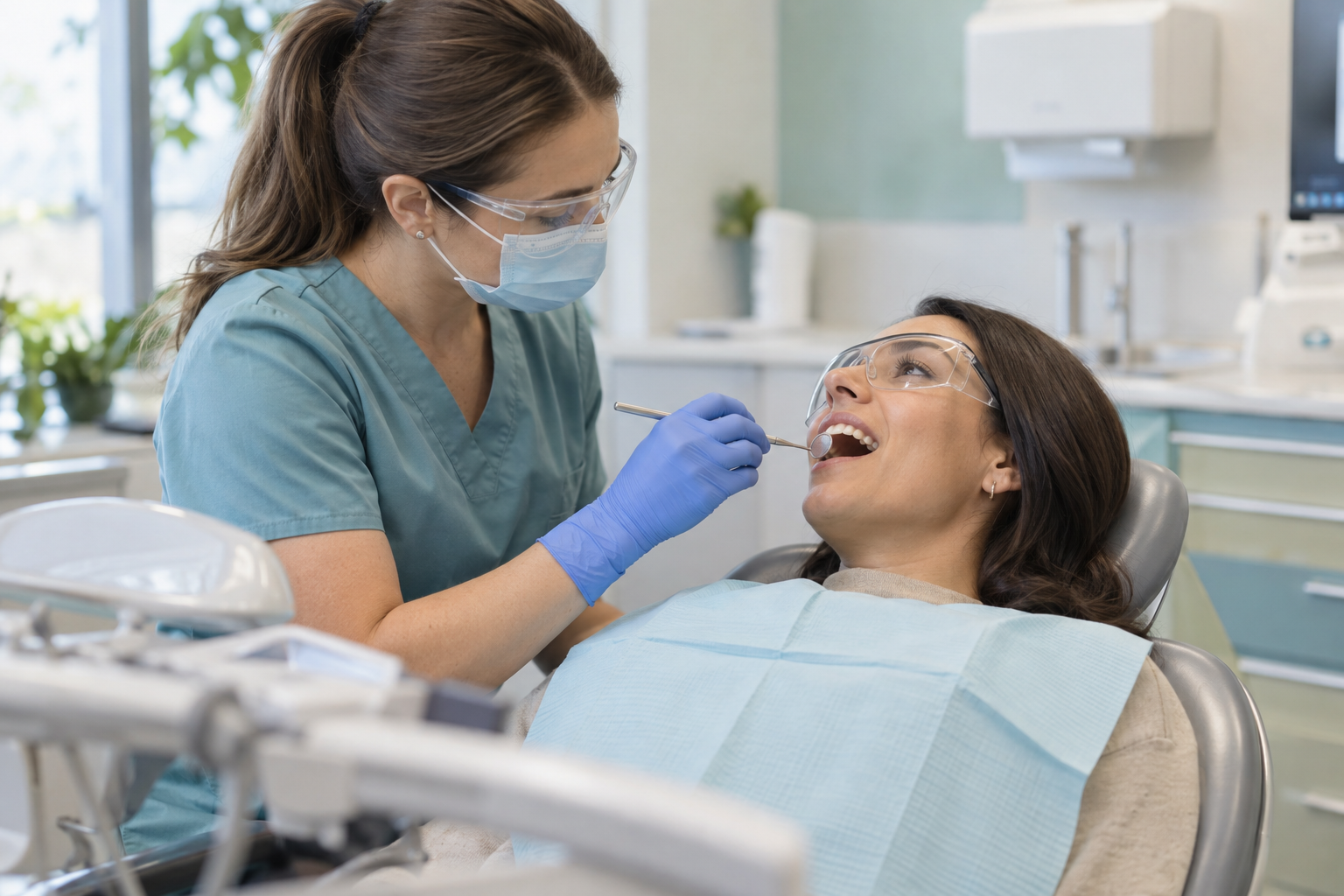
A new patient dental exam usually includes a review of your medical and dental history, a conversation about your concerns, an examination and a discussion of the findings. X-rays may form part of the assessment, depending on your needs. Cleaning or treatment may require a separate appointment.
Before booking, clarify whether you need a comprehensive first examination or an appointment for a specific problem. A comprehensive visit assesses your overall oral health. A problem-focused visit concentrates on a concern such as tooth pain or a broken tooth, so a broader assessment may need to be arranged separately.
If you are changing dentists, moving to Brampton or returning after a gap in care, knowing what to prepare can make the visit easier. Revita Dentistry’s comprehensive oral examination service includes assessment of your teeth, gums, existing dental work and other oral structures.
How to Prepare for Your New Patient Dental Exam

You do not need a complete account of every dental appointment you have ever had. Bring the information you have and make a note of anything you want to discuss.
A useful preparation checklist includes:
- Your medication list: Include prescriptions, over-the-counter medicines and supplements, with doses if available.
- Relevant health information: Note medical conditions, allergies, previous reactions to dental treatment and pregnancy, if applicable.
- Your previous dentist’s contact details: Ask how to arrange the transfer of relevant records and X-rays.
- Dental benefit information: Bring your plan details, if applicable, and ask whether the office needs anything in advance.
- Your main questions: Write down symptoms, concerns or treatment recommendations you would like explained.
Your previous practice can provide copies of relevant dental records to your new dentist with your consent. Requesting the transfer before your appointment gives the receiving team an opportunity to review what is available.
Revita Dentistry is accepting new patients in Brampton. When arranging your first appointment, mention tooth pain, swelling or a recent injury so the team can advise you about the appropriate visit. You can also ask whether forms are available to complete beforehand.
Your History and Concerns Come First

The first conversation helps your dentist understand why you are attending and what may affect your care.
Expect questions about previous dental treatment, your home-care habits and any current symptoms. Your medical conditions, medications and allergies also help inform treatment decisions.
Describe symptoms as specifically as you can. For example, explain whether a tooth hurts when you bite, reacts to cold or bothers you at night. Mention when the problem started and whether it is changing.
Previous experiences matter too. If you feel anxious, have a sensitive gag reflex or find it difficult to keep your mouth open, explain this before the examination. You can ask for each step to be explained and agree on a signal if you need a pause.
If it has been years since your last visit, share what you remember. The assessment can help establish your current needs without relying on a perfect recollection of past care.
What Does the Dentist Check?
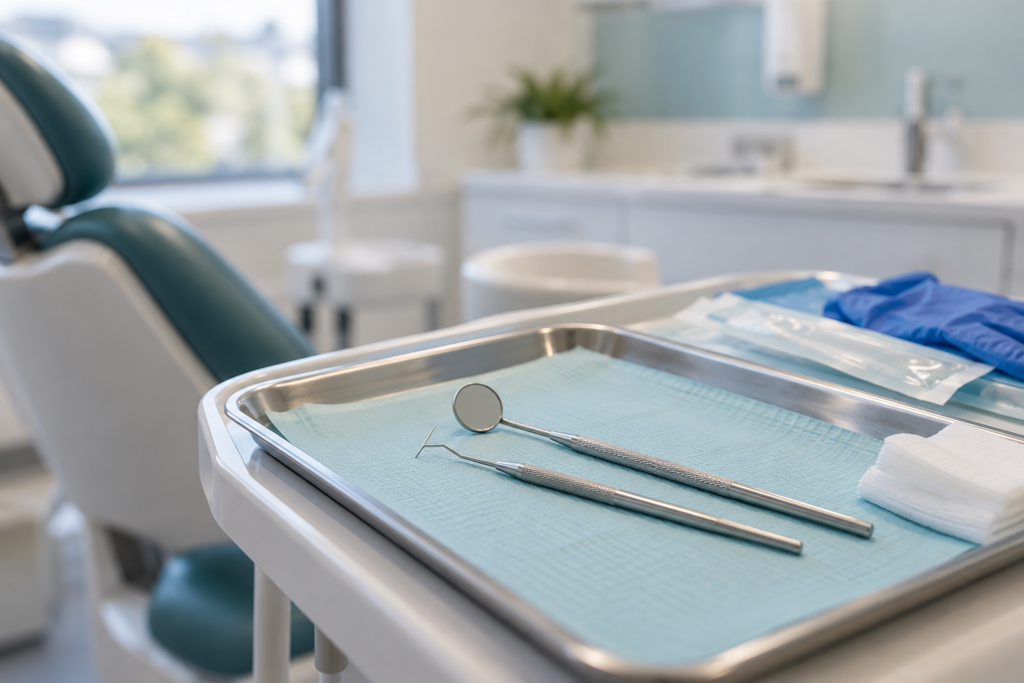
At a first comprehensive visit, the dentist records your current findings so they can be compared at future appointments.
The examination generally includes:
- Teeth and existing restorations: Checking for decay, damage, wear and the condition of fillings, crowns or other dental work.
- Gums and supporting tissues: Looking for inflammation, bleeding and other signs of gum disease. Gum measurements may form part of the assessment.
- Bite and jaw function: Assessing how your teeth meet and checking for signs associated with clenching, grinding or jaw problems.
- Oral tissues: Examining areas such as your lips, tongue, cheeks and palate for unusual changes. The dentist may also examine your neck and jaw area.
Tell the dentist if an area feels tender. If a finding needs further investigation, they can explain whether additional testing, monitoring or a referral is appropriate.
Will You Need New Dental X-Rays?
Being new to a practice does not automatically mean you need a complete new set of X-rays.
Your dentist bases imaging recommendations on your medical and dental history, clinical findings, disease risk and available previous images. Additional images may be recommended when existing ones do not provide enough information about your current needs.
If imaging is recommended, you can ask:
- What are you looking for?
- Can my previous images help?
- How could this image affect the diagnosis or treatment plan?
These questions help you understand the reason for the recommendation before proceeding.
Will Cleaning or Treatment Happen at the Same Appointment?
An examination assesses your oral health and helps identify care needs. Professional cleaning removes plaque and hardened deposits. The type of cleaning recommended depends on the assessment of your teeth and gums.
Some appointments include both an examination and cleaning. Others are scheduled for assessment first, with cleaning arranged separately. Confirm what your booking includes.
Treatment may also require another appointment. Finding a cavity during the examination, for example, does not mean a filling has automatically been scheduled for that day. The next step depends on the findings, the proposed care and the time available.
How long should you allow? The time needed depends on the appointment’s scope, your concerns and whether imaging or cleaning is scheduled. Ask the office how much time to allow.
Understanding the Findings and Your Next Steps

After the assessment, your dentist can explain the findings and any recommended care. Images or photographs, when available, may help make the explanation clearer.
If several issues are identified, ask which concerns need prompt attention, which can be planned and which may be suitable for monitoring.
Other useful questions include:
- What are the reasonable treatment options?
- Why do you recommend a particular option?
- What are the benefits and risks?
- What could happen if I delay treatment?
- What should I change in my home-care routine?
Before agreeing to treatment, ask for an explanation of the proposed care and an estimate of the fees. If you have dental benefits, ask how those fees relate to your benefits and what you may need to pay. An estimate of reimbursement is not a guarantee of coverage.
A written treatment plan can be helpful when several procedures or appointments are being discussed. It gives you something to refer to as you consider the recommendations.
Frequently Asked Questions
Ask the office beforehand if you would like a friend or family member to accompany you for reassurance or help remembering information. The team can explain whether they can join you in the treatment area and confirm that you are comfortable discussing your health information in their presence.
Contact the practice before your visit to explain your language or physical-access needs. Ask about interpreter arrangements, access to the treatment area or any assistance you may need when moving into the dental chair. Confirm what is available before attending.
Continue your usual gentle oral-hygiene routine. There is no need to scrub harder or force floss into uncomfortable areas to prepare for the appointment. Brushing twice daily and cleaning between your teeth daily are ongoing habits, rather than something to save for the day of a visit.
Call the office and explain what you would like clarified. Mention the date of your appointment and the point you are asking about so your message can reach the appropriate team member. Ask whether a phone conversation or follow-up appointment would be the best way to address it.
Planning Your First Visit at Revita Dentistry
You do not need to know which treatment you need before attending. A few clear questions and the information you have available are enough to start the conversation.
If you are ready to arrange a first visit or want help understanding which appointment to request, connect with Revita Dentistry to discuss your concerns and what to expect.