

- Reviewed by
Table of Contents
Introduction
Missing teeth can affect how you chew, speak, and feel about your smile. If you have lost one or more teeth, dental implants can provide a stable way to replace missing teeth and restore everyday oral function.
But are dental implants right for you? What does the treatment involve, how long does it take, and what should you expect during recovery?
This guide explains the essentials of dental implants in Brampton, including implant types, dental implant surgery, candidacy, benefits, costs, alternatives, and aftercare. Understanding these factors can help you have a more informed conversation with your dentist before deciding on treatment.
What Are Dental Implants?
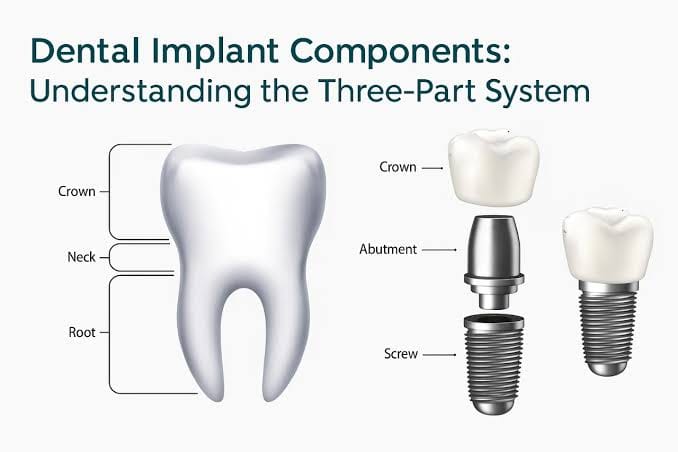
Dental implants are small posts surgically placed into the jawbone to replace the root of a missing tooth. Once the implant has healed and integrated with the surrounding bone, it can support a replacement tooth or restoration.
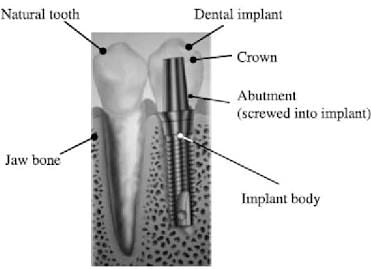
A typical implant-supported tooth consists of:
- Implant : The post positioned in the jawbone.
- Abutment : The connector between the implant and restoration.
- Crown : The visible replacement tooth.
The process in which the implant integrates with the jawbone is called osseointegration. This creates a stable foundation for the final restoration.
If you’re considering dental implants in Brampton, a consultation is the best way to determine whether implant treatment is appropriate for your oral health and tooth-replacement needs.
Who Can Get Dental Implants?
Dental implants are not determined by age alone. Your dentist will assess your oral health, jawbone, gums, medical history, and treatment goals before recommending implants.
You may be a potential candidate if you:
- Have one or more missing teeth
- Have healthy gums or manageable gum disease
- Have sufficient jawbone to support an implant
- Maintain good oral hygiene
- Have appropriately managed health conditions
- Can follow post-treatment instructions
If you have experienced bone loss, implants may still be possible in some circumstances. Your dentist may recommend additional treatment, such as bone grafting, before implant placement.
Smoking, gum disease, certain medications, and other health factors can also influence healing. A comprehensive examination and appropriate imaging can help your dentist determine the safest and most suitable approach.
Types of Dental Implant Treatment
Different implant solutions are available depending on the number of missing teeth and your overall oral health.
Single Tooth Implants
A single dental implant can replace one missing tooth by supporting an individual crown. This can be an option when one tooth is missing and the surrounding teeth are otherwise healthy.
Learn more about single tooth implants in Brampton if you are considering this type of tooth replacement.
Dental Implant Surgery
Dental implant surgery is the procedure used to place an implant into the jawbone. It begins with careful treatment planning and assessment of the implant site.
During surgery, the dentist places the implant into the jawbone using an appropriate surgical technique and anesthesia. After placement, the implant requires time to heal and integrate with the surrounding bone.
The complexity of surgery can vary depending on factors such as:
- Location of the missing tooth
- Available bone
- Number of implants required
- Gum health
- Need for extraction or bone grafting
- Overall treatment complexity
Learn more about dental implant surgery to understand the surgical stage of treatment in greater detail.
Full-Arch Dental Implants
Patients missing most or all of their teeth may be candidates for an implant-supported full-arch restoration.
Depending on individual circumstances, treatments such as All-on-4 or All-on-6 may be considered. These approaches use strategically positioned implants to support a complete arch of replacement teeth.
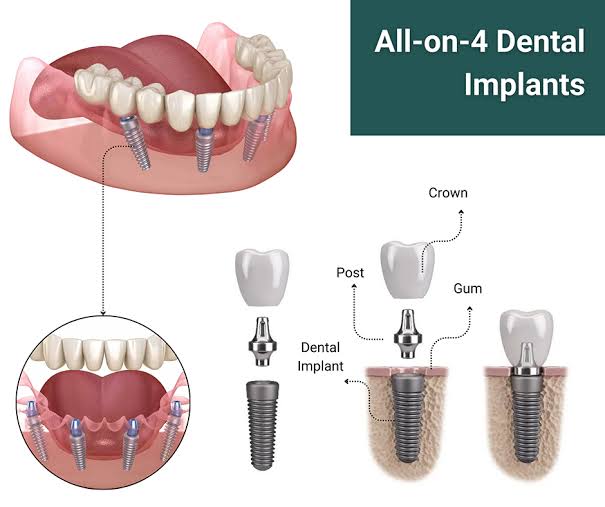
Explore All-on-X dental implants to learn more about full-arch tooth replacement.
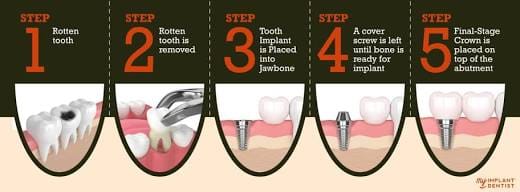
What Is the Dental Implant Process?
Although every patient’s treatment is different, dental implant treatment generally follows several stages.
1. Consultation and Examination
Your dentist evaluates your teeth, gums, bite, jawbone, and overall oral health. X-rays or other diagnostic imaging may be used to assess the implant site.
2. Treatment Planning
Your dentist develops a personalized plan based on your oral health, bone structure, number of missing teeth, and desired restoration.
If you have an infection, gum disease, insufficient bone, or another concern, it may need to be addressed before implant placement.
3. Implant Placement
During dental implant surgery, the implant is positioned in the jawbone. Appropriate anesthesia is used to maintain your comfort during treatment.
4. Healing
The implant needs time to integrate with the surrounding bone through osseointegration. The healing period varies between patients.
5. Final Restoration
Once healing has progressed appropriately, the abutment and final restoration can be placed. Depending on your treatment plan, this may be a crown, bridge, or full-arch restoration.
How Long Does Dental Implant Treatment Take?
There is no single timeline for every patient.
Treatment duration can be affected by:
- Number of implants
- Bone condition
- Gum health
- Healing response
- Tooth extraction
- Bone grafting
- Type of final restoration
Straightforward cases may require fewer stages, while more complex cases can take longer. Your dentist can provide a more accurate timeline after assessing your individual needs.
Benefits and Risks of Dental Implants
When clinically appropriate, dental implants can provide several advantages.
Potential Benefits
- Stable tooth replacement: Implants provide a fixed foundation for a restoration.
- Natural-looking results: Crowns and other restorations can be designed to complement surrounding teeth.
- Improved chewing: Replacing missing teeth can help restore everyday oral function.
- Jawbone support: An implant replaces the root portion of a missing tooth.
- Long-term solution: With proper care and maintenance, implants can be a durable tooth-replacement.
Potential Risks
Like any surgical treatment, dental implant treatment has potential risks. These may include infection, delayed healing, implant failure, damage to nearby structures, or problems affecting the gums, bone, or restoration.
Risk varies according to factors such as oral health, anatomy, smoking, medical conditions, and treatment complexity.
Your dentist should explain the benefits, risks, alternatives, and expected outcomes relevant to your individual situation.
Dental Implants vs. Dentures vs. Bridges
If you have missing teeth, implants are not your only option.
| Feature | Dental Implants | Dentures | Dental Bridges |
| Fixed replacement | Yes | Usually removable | Yes |
| Replaces tooth root | Yes | No | No |
| Can replace one tooth | Yes | Yes | Yes |
| Can replace multiple teeth | Yes | Yes | Yes |
| Surgery required | Yes | No | Usually no |
The right choice depends on your oral health, number of missing teeth, bone condition, lifestyle, budget, and treatment goals.
A consultation allows your dentist to compare these options and explain which may be appropriate for your situation.
How Much Do Dental Implants Cost in Brampton?
The cost of dental implants varies because treatment is customized to each patient.
Your total cost may depend on:
- Number of implants
- Type of restoration
- Diagnostic imaging
- Tooth extraction
- Bone grafting
- Temporary restorations
- Final crowns, bridges, or full-arch restorations
- Complexity of treatment
Rather than relying on a generic online price, ask your dentist for a personalized treatment estimate that explains what is included.
If you’re researching the cost of dental implants in Brampton, a consultation can provide a clearer understanding of your treatment requirements and expected investment.
Are Dental Implants Covered by Insurance or CDCP?
Coverage depends on your individual dental insurance plan and the specific treatment being provided.
Some plans may have annual maximums, deductibles, waiting periods, or procedure-specific limitations.
If you have Canadian Dental Care Plan (CDCP) coverage, review your individual benefits and eligibility before treatment. Your dental office can help explain the proposed treatment costs, while your plan provider can confirm your coverage.
How to Choose an Implant Dentist in Brampton
Choosing a dental provider is an important part of the implant process.
When evaluating a dentist, consider whether they:
- Perform a comprehensive examination
- Explain your treatment options
- Use appropriate diagnostic technology
- Discuss potential risks and benefits
- Provide a personalized treatment plan
- Explain treatment costs clearly
- Have relevant experience with implant treatment
- Provide appropriate follow-up care
Don’t hesitate to ask questions about the proposed procedure, expected recovery, restoration options, and long-term maintenance.
How Do You Care for Dental Implants?
Dental implants still require regular care.
After treatment:
- Brush your teeth regularly.
- Clean around the implant as instructed.
- Follow your dentist’s oral hygiene recommendations.
- Attend regular dental examinations.
- Have professional cleanings when recommended.
- Avoid tobacco products, particularly during healing.
- Follow all post-operative instructions.
Although an implant-supported crown cannot develop a cavity like a natural tooth, the surrounding gums and tissues can still develop problems without proper care.
Frequently Asked Questions
Are dental implants painful?
Dental implant surgery is performed using appropriate anesthesia to keep you comfortable during treatment. Some soreness, swelling, or tenderness may occur during recovery. Your dentist will provide specific post-operative instructions.
How long do dental implants last?
Dental implants are designed as a long-term tooth-replacement option, but longevity varies. Oral hygiene, gum health, bite forces, smoking, general health, and professional maintenance can all influence long-term outcomes.
Can I get dental implants if I have bone loss?
Possibly. Bone loss does not automatically prevent implant treatment. Depending on your situation, your dentist may recommend bone grafting or another procedure before implant placement.
Can one implant replace one missing tooth?
Yes. A single dental implant can support an individual crown when your bone, gums, and overall oral health are suitable for treatment.
Restore Your Smile With Dental Implants in Brampton
Replacing missing teeth is an important decision. The right treatment depends on your oral health, bone structure, gum condition, number of missing teeth, lifestyle, and long-term goals.
Dental implants can provide a stable and natural-looking tooth-replacement option when they are clinically appropriate. A personalized consultation allows you to understand your treatment options, expected timeline, recovery, and costs before making a decision.
If you’re considering dental implants in Brampton, contact Revita Dentistry to discuss your options and schedule a consultation.