

Table of Contents
Introduction
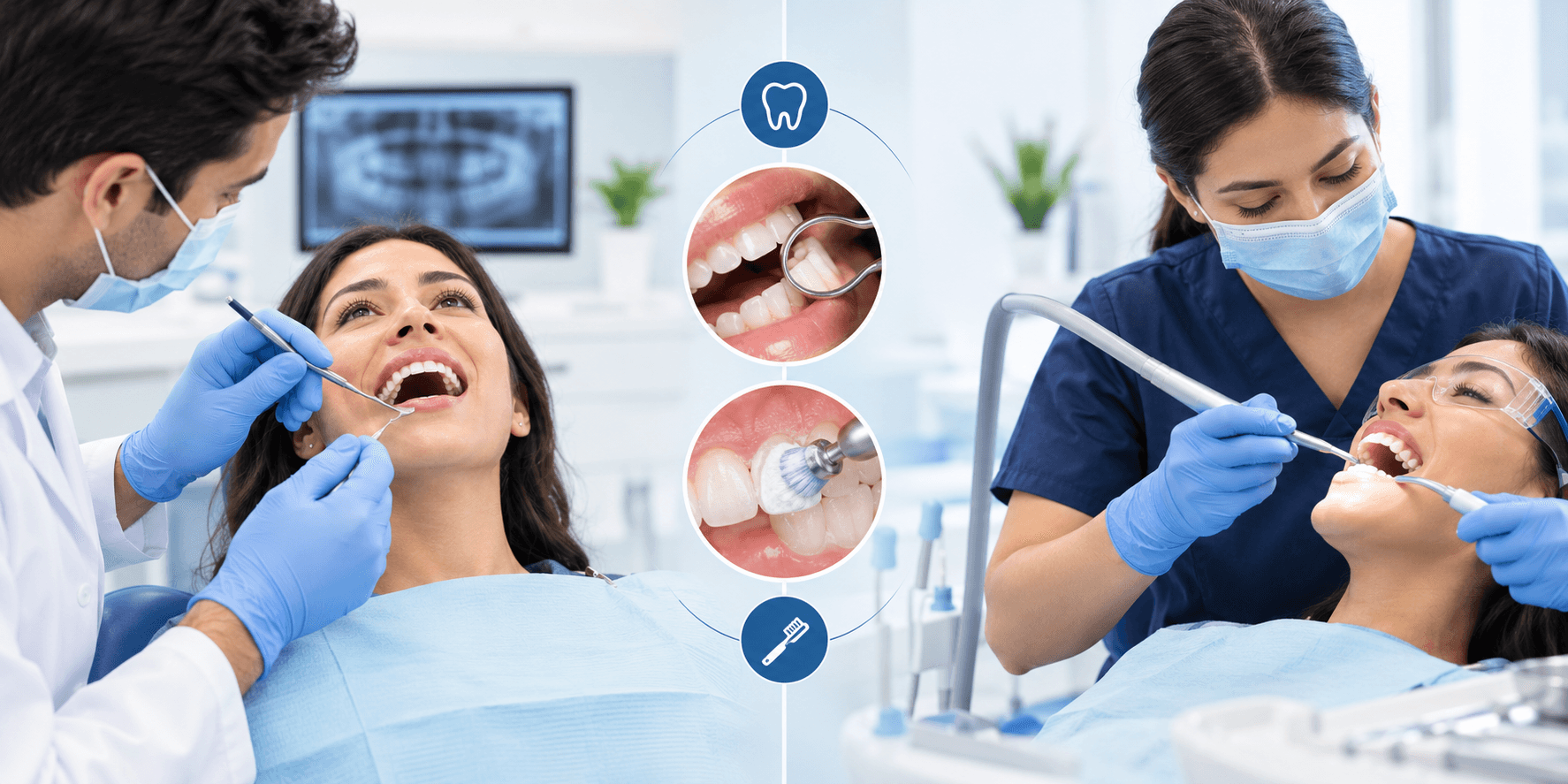
A dental exam and a professional dental cleaning are often booked during the same visit, so it is easy to assume they are the same thing.
They are not.
A dental exam is primarily about assessing your oral health. Your dentist looks for problems such as cavities, gum disease, damaged teeth, signs of infection, changes in your bite and abnormalities affecting the soft tissues of your mouth. X-rays may also be recommended when they are clinically appropriate.
A dental cleaning is focused on removing plaque, tartar and certain surface stains that regular brushing and flossing cannot fully remove.
In other words, the exam helps determine what is happening with your oral health, while the cleaning helps remove buildup and maintain your teeth and gums.
Both can play an important role in preventive dental care, and many patients have them during the same appointment.
If you are unsure whether you need an exam, a cleaning, or both, this guide explains the difference, what happens during each appointment, how often you may need them and why they are often scheduled together.
Dental Exam vs Dental Cleaning at a Glance
| Dental Exam | Dental Cleaning |
|---|---|
| Evaluates your overall oral health | Removes plaque and tartar buildup |
| Performed by a dentist | Often performed by a dental hygienist or other appropriately qualified dental professional |
| Looks for cavities, gum disease, damaged teeth and other concerns | Uses scaling and polishing to clean tooth surfaces |
| May include an assessment of your bite, jaw and oral tissues | Helps maintain cleaner teeth and support gum health |
| May include X-rays when clinically indicated | May be performed during the same visit as an exam |
| Helps identify whether treatment is needed | Helps maintain oral hygiene and remove hardened buildup |
The important point is that one does not replace the other.
The Canadian Dental Association describes a dental exam as an assessment performed by a dentist, while professional cleaning typically involves scaling and polishing to remove plaque and tartar.
What Is a Dental Exam?
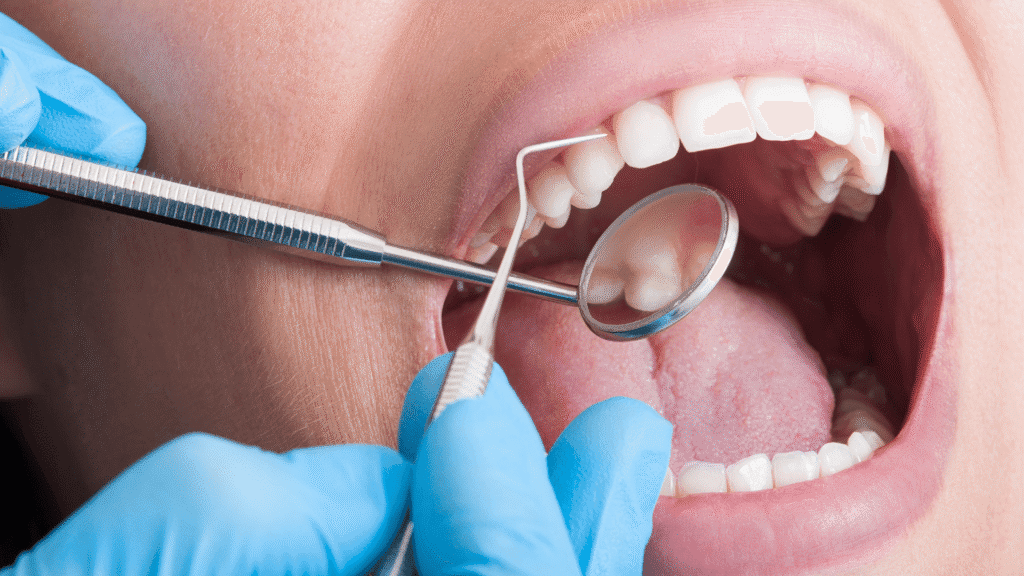
A dental exam is a clinical assessment of your teeth, gums and other structures in and around your mouth.
During an exam, your dentist is looking for problems that may not be visible or noticeable to you at home.
This can include:
- Early signs of tooth decay
- Cavities
- Damaged or broken teeth
- Gum inflammation and signs of periodontal disease
- Problems with existing fillings, crowns or other dental work
- Changes in your bite
- Signs of grinding or clenching
- Problems involving the jaw or temporomandibular joint
- Abnormalities affecting the tongue, cheeks, palate or other oral tissues
- Signs that may require further investigation
The Canadian Dental Association explains that a dental exam can identify conditions such as damaged or missing teeth, early cavities, gum disease, problems with existing dental work and signs of oral cancer.
At Revita Dentistry, the oral examination service also includes assessment of the teeth, gums, bite and jaw function, along with examination of the soft tissues of the mouth and oral cancer screening. Digital X-rays may be used when needed.
What Is a Dental Cleaning?
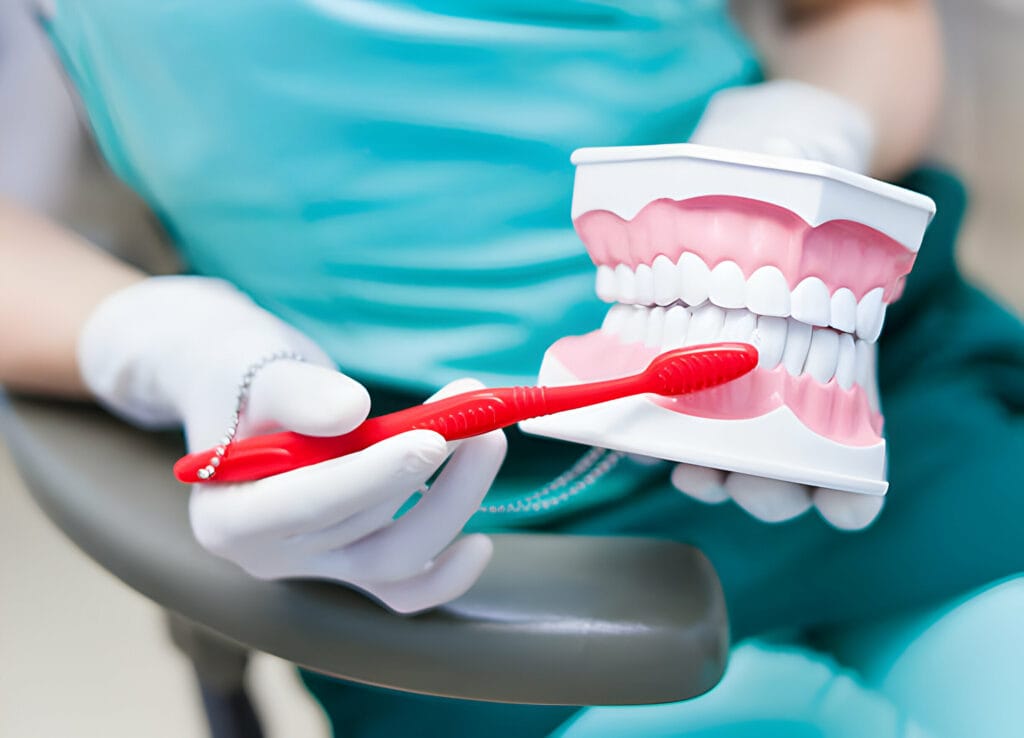
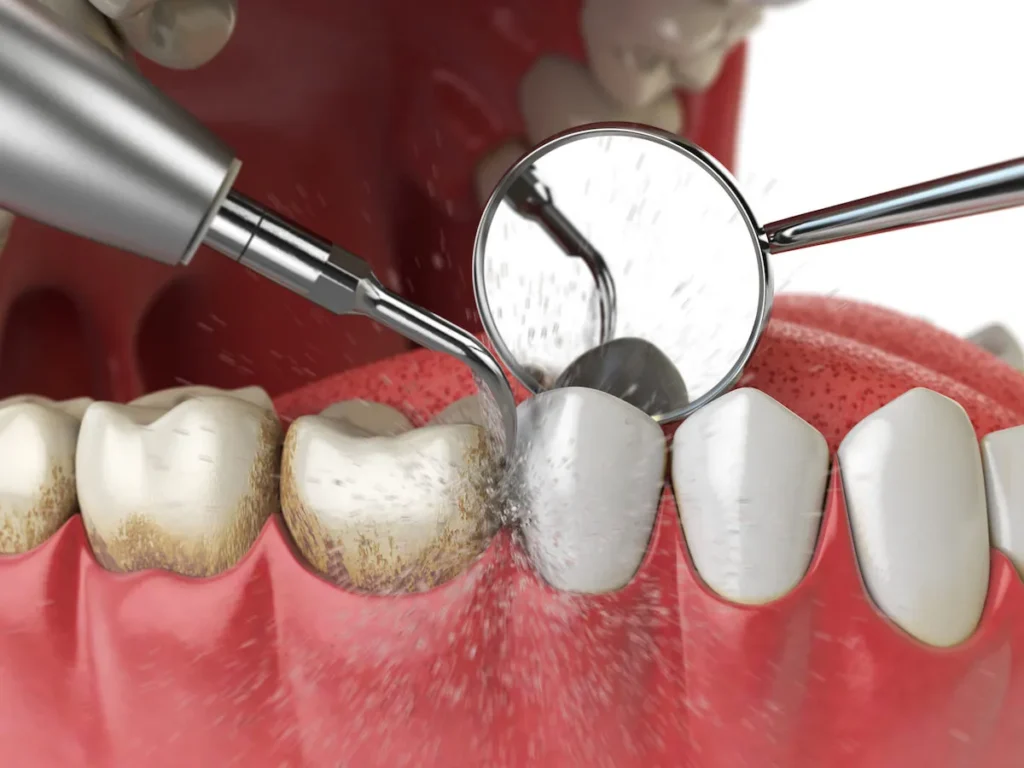
A professional dental cleaning is designed to remove plaque, tartar and certain deposits from your teeth that cannot be completely removed through normal brushing and flossing.
The Ontario Dental Association describes professional scaling and polishing as procedures used to remove plaque and calculus and, where appropriate, polish the teeth.
Plaque is a sticky film that forms on your teeth.
When plaque is not removed effectively, it can harden into calculus, also called tartar. Once tartar has formed, brushing and flossing alone cannot remove it.
A professional cleaning allows dental professionals to remove this buildup from areas that can be difficult to clean at home.
Dental Exam vs Dental Cleaning: What Is the Main Difference?
The simplest way to remember the difference is:
A dental exam looks for problems. A dental cleaning removes buildup.
The exam is primarily diagnostic.
The cleaning is primarily preventive and hygiene-focused.
During an exam, your dentist is assessing the condition of your teeth, gums and oral tissues and deciding whether anything needs further attention.
During a cleaning, the focus is on removing plaque, tartar and certain surface deposits.
They serve different purposes, but they complement each other.
Can You Have a Dental Exam and Cleaning on the Same Day?
Yes.
In fact, it is common for patients to have both during the same dental visit.
This can sometimes make the two procedures seem like one treatment.
But even when they happen during the same appointment, they are still different parts of your dental care.
For example, your appointment might involve:
- Reviewing your dental and medical history
- Examining your teeth and gums
- Taking X-rays if clinically indicated
- Performing a professional cleaning
- Discussing findings and recommendations
- Planning any follow-up treatment if needed
The exact sequence can vary depending on the appointment and your oral health needs.
How Often Should You Get a Dental Cleaning?
Cleaning frequency also varies between patients.
Some people may benefit from routine professional cleanings at regular intervals, while others may need more frequent care because of tartar buildup, gum disease or other risk factors.
It is better to follow an individualized schedule than assume that everyone needs exactly the same number of cleanings each year.
Do You Need X-Rays During Every Dental Exam?
No.
Dental X-rays are not automatically required at every exam.
Your dentist decides whether an X-ray is appropriate based on your clinical examination, dental history, symptoms and risk of disease.
The RCDSO specifically states that radiographs should not be prescribed according to inflexible time periods alone.
For example, someone with a stable oral health history may not need the same imaging schedule as someone who has a higher risk of cavities or is being monitored for an existing condition.
If your dentist recommends an X-ray, you can always ask what information it is intended to provide.
What If I Have No Dental Pain?
You may still benefit from regular dental care.
Pain is not a reliable indicator of whether your mouth is healthy.
Some dental conditions can develop before they produce noticeable symptoms. The Ontario Dental Association specifically notes that many dental diseases may not cause symptoms in their early stages.
A routine examination gives your dentist an opportunity to look for problems before they become more advanced.
A professional cleaning also helps manage plaque and tartar that can accumulate even when you brush and floss regularly.
What If My Gums Bleed During Brushing?
Bleeding gums are worth discussing with a dental professional.
They can be associated with gum inflammation and other oral health problems.
A cleaning may help remove plaque and tartar contributing to gum irritation, but your dentist may also need to assess the health of your gums to determine what is causing the bleeding.
The Ontario Dental Association lists bleeding gums among signs that should be evaluated and explains that periodontal examinations may be used to assess gum health.
If bleeding is persistent, do not simply assume that you need a stronger toothbrush or more frequent cleaning. An examination can help identify the underlying issue.
Dental Exam vs Dental Cleaning for New Patients
If you are visiting a dentist for the first time, your appointment may involve more than a routine cleaning.
Your dentist may need to establish a baseline understanding of your oral health.
This can include:
- Medical and dental history
- Comprehensive examination
- Assessment of your teeth and gums
- Evaluation of existing dental work
- Oral soft tissue examination
- X-rays when clinically indicated
- Discussion of your concerns
- Recommendations for future preventive care
The Ontario Dental Association recommends that patients provide information about medical conditions, medications, dental symptoms, sensitivity, grinding, tobacco and alcohol use and relevant family history because these factors can influence dental care.
What If I Have Not Seen a Dentist in Years?
You are not alone, and delaying dental care does not mean you should continue to delay it.
If it has been several years since your last appointment, your first visit may require a more comprehensive assessment rather than simply a quick cleaning.
Your dentist may need to evaluate:
- Existing tartar
- Gum health
- Cavities
- Broken or worn teeth
- Existing restorations
- Missing teeth
- Bite changes
- Symptoms you may have been ignoring
- Whether X-rays are appropriate
The purpose is to understand where your oral health stands now and determine what care, if any, is needed next.
Dental Exam vs Dental Cleaning: Which One Do You Need?
There is not necessarily a choice between the two.
For many patients, both are useful because they address different parts of preventive dental care.
You may need a dental exam if:
- You are due for a routine check-up
- You have not seen a dentist recently
- You have tooth pain or sensitivity
- Your gums bleed
- You notice a change in your mouth
- You have a broken or loose tooth
- You are concerned about an existing filling, crown or other restoration
- You want an assessment of your overall oral health
You may benefit from a professional cleaning if:
- You have visible tartar
- You have plaque buildup
- You have difficulty cleaning certain areas
- You have a history of gum problems
- You want professional preventive care
- Your dental professional has recommended a cleaning schedule
And in many cases, the appropriate plan is both an examination and a cleaning.
Dental Exam vs Dental Cleaning: What About Oral Cancer Screening?
An oral examination can include an assessment of the soft tissues of the mouth for unusual changes.
The Ontario Dental Association notes that a dental exam may include looking for early signs of mouth or throat cancer and other suspicious growths or cysts.
A cleaning, on the other hand, is not designed to diagnose oral cancer.
This is another reason why a professional cleaning should not be viewed as a replacement for an oral examination.
If you notice a sore, lump, patch or other unusual change that does not resolve, contact a dental professional for an assessment.
Is a Dental Cleaning Enough If My Teeth Look Clean?
Not necessarily.
Clean-looking teeth do not automatically mean that there are no dental problems.
A professional cleaning can remove plaque, tartar and surface deposits, but it does not replace the dentist’s clinical assessment.
For example, a problem between teeth or beneath the gum line may not be visible when you look in the mirror.
That is why preventive dental care involves more than keeping the visible surfaces of your teeth clean.
How Dental Exams and Cleanings Work Together
Think of the two services as different pieces of the same preventive-care routine.
The exam answers questions such as:
- Are there cavities?
- Are my gums healthy?
- Is my existing dental work in good condition?
- Is there anything unusual in my mouth?
- Do I need an X-ray?
- Do I need treatment?
The cleaning addresses questions such as:
- Is there tartar buildup?
- Where is plaque accumulating?
- Can hardened deposits be removed professionally?
- Are there areas I need to improve at home?
Together, they give your dental team a better picture of your current oral health and help maintain your teeth and gums.
How to Prepare for Your Dental Exam and Cleaning
You do not need to do anything complicated before a routine appointment.
It can help to:
- Brush and clean between your teeth as usual
- Bring an updated medication list
- Tell the dental team about changes in your health
- Mention any tooth sensitivity or pain
- Tell your dentist if your gums bleed
- Mention jaw pain or grinding
- Bring information about previous dental treatment if you are a new patient
- Ask questions about anything you do not understand
Most importantly, do not postpone an appointment because you feel embarrassed about the condition of your teeth.
Dental teams regularly see patients who have missed appointments or have not had professional care for years.
Are Dental Exams and Cleanings Covered by the CDCP?
Coverage depends on your eligibility and the specific services recommended.
The Ontario Dental Association states that the Canadian Dental Care Plan can cover certain services, including examinations, X-rays, scaling and polishing, depending on the circumstances and applicable CDCP rules. Some services may require preauthorization.
Coverage should not be assumed simply because a service is commonly provided.
Before treatment, ask your dental office about the expected costs and confirm your coverage with the CDCP or your plan administrator.
Frequently Asked Questions
No.
A dental exam evaluates your oral health and looks for conditions such as cavities, gum disease, damaged teeth and other abnormalities. A cleaning removes plaque, tartar and certain surface deposits.
They are often performed during the same visit but have different purposes.
Not necessarily.
The appropriate frequency depends on your oral health, medical history and individual risk factors. The Ontario Dental Association recommends dental visits at least annually, with more frequent examinations for some patients.
Some patients benefit from cleanings around every six months, while others may need a different schedule.
Your dental professional can recommend an interval based on your oral health and tartar buildup.
A dental hygienist can perform certain assessments within their scope of practice, but the comprehensive dental examination that diagnoses dental conditions is performed by a dentist.
A cleaning may reveal signs that need attention, but diagnosing and assessing gum disease requires an appropriate periodontal examination.
Your dentist or dental professional can evaluate your gum health and recommend treatment when necessary.
Your dental team will determine what is appropriate based on your circumstances.
For new patients, patients with symptoms or patients who have not been examined recently, an oral examination may be particularly important.
Dental Exams and Cleanings at Revita Dentistry in Brampton
Still have questions or feeling unsure about whether you need an exam, a cleaning, or both? Revita Dentistry, a trusted dentistry in Brampton, can help you understand your options and find the right next step for your oral health.