

Table of Contents
Introduction
A small chip on a front tooth can be surprisingly noticeable, even when it does not cause any pain. So can a slightly uneven edge, a narrow gap between two teeth, or a patch of discolouration that whitening never quite corrected. None of these problems automatically call for veneers, a crown, or orthodontic treatment. For many minor cosmetic concerns, dental bonding offers a more conservative way to change the shape or appearance of a tooth using tooth-coloured composite resin.
Bonding is not the right fit for every situation. A tooth with extensive decay, a large fracture, or significant misalignment usually needs a different kind of treatment. Deciding whether bonding makes sense starts with understanding what it can realistically achieve, how the procedure works, how long the results tend to last, and how it compares with alternatives such as veneers, crowns, whitening, and Invisalign.
This guide walks through each of those questions, along with what to expect from a consultation for dental bonding in Brampton at Revita Dentistry.
What Is Dental Bonding?
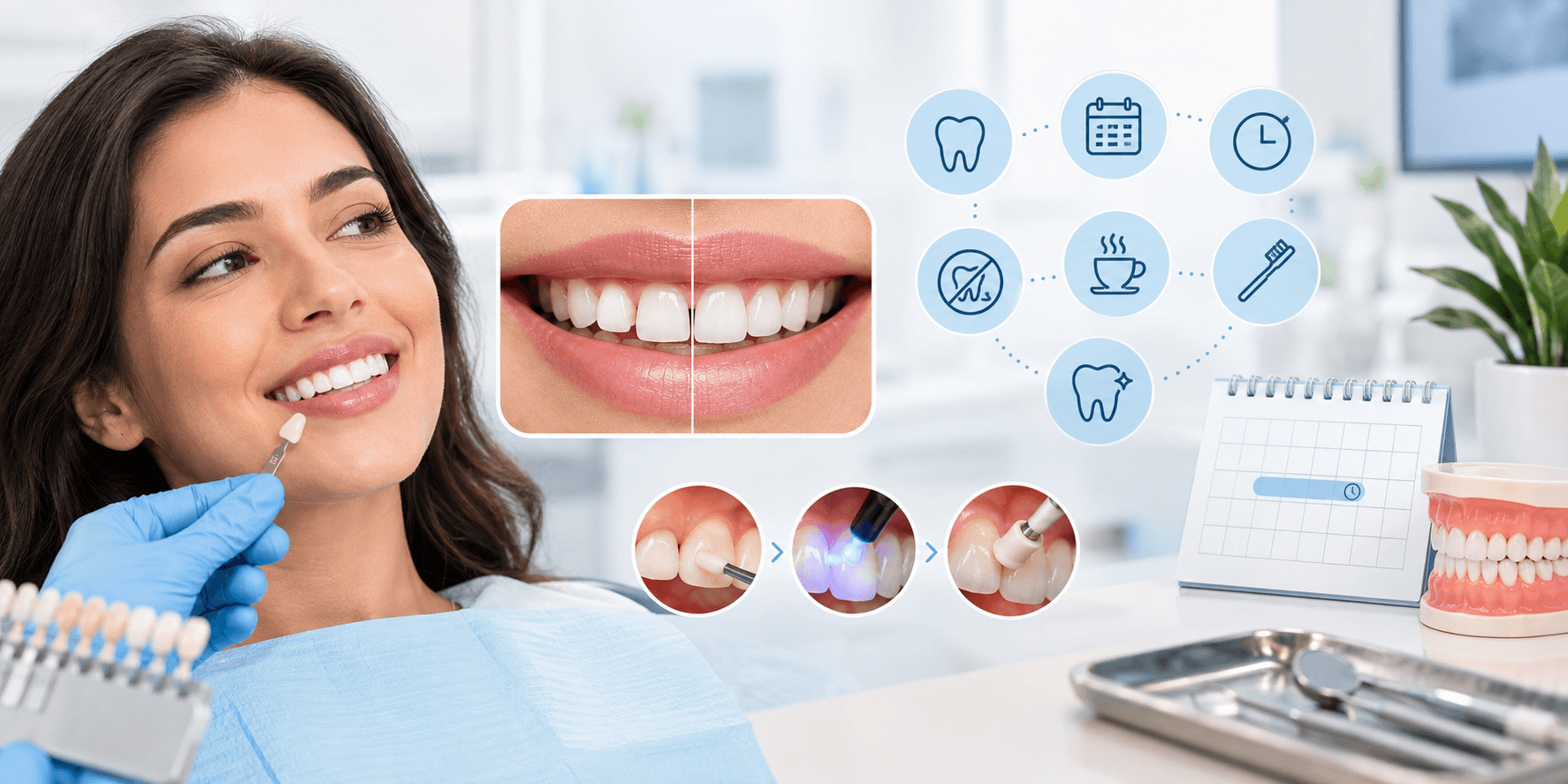
Dental bonding, also called composite bonding or tooth bonding, is a procedure in which a dentist applies tooth-coloured composite resin directly onto a tooth and shapes it to improve its appearance or repair a small amount of damaged structure.
The same family of composite resin materials is used in tooth-coloured fillings, but cosmetic bonding is typically focused on changing the visible shape, contour, spacing, or colour of a tooth rather than restoring a cavity. Because the resin is built up on the tooth rather than replacing large amounts of it, bonding generally requires little or no removal of healthy enamel, which is why it is often described as a conservative treatment.
What Can Dental Bonding Fix?
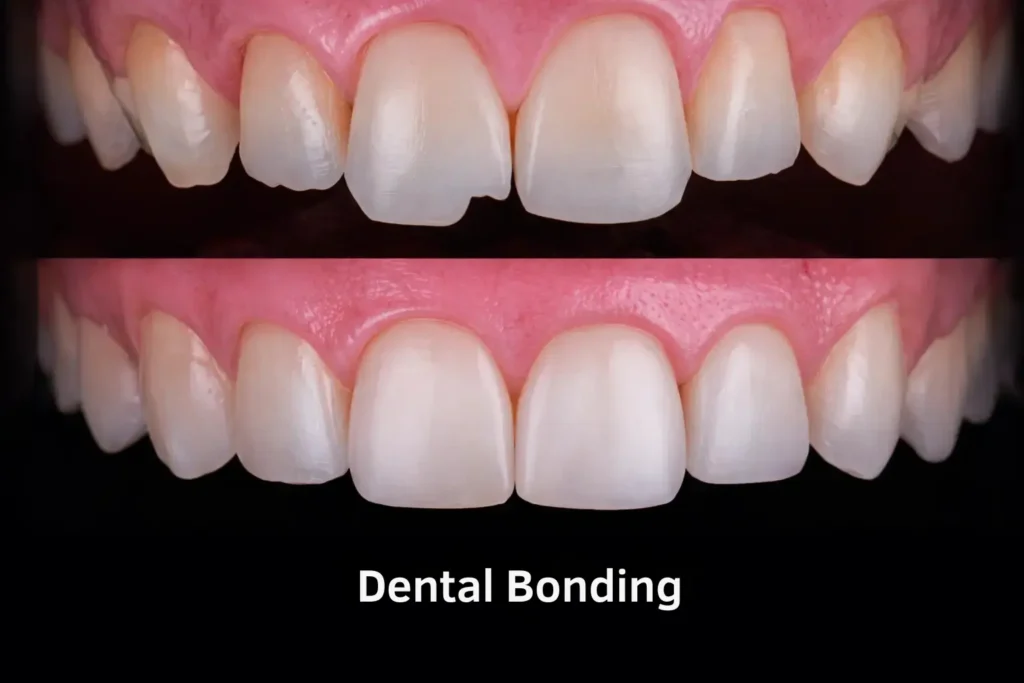
Dental bonding is generally most useful for relatively small cosmetic or structural concerns.
Depending on the condition of the tooth, bonding may be used to:
- Repair a small chip
- Improve the appearance of a minor crack
- Close a small gap between teeth
- Reshape uneven or worn tooth edges
- Make a tooth appear slightly longer
- Improve the appearance of certain areas of discolouration
- Make small changes to the shape or proportion of a tooth
The important part is the phrase depending on the condition of the tooth.
A large fracture, extensive decay, severe tooth wear, significant crowding, or a weakened tooth may require a different treatment. A dental examination is the best way to determine whether bonding can provide a predictable result.
Can Dental Bonding Fix a Chipped Tooth?
Yes. Minor chips are one of the most common reasons dentists use bonding.
The dentist can add composite resin to the area where the tooth has chipped and shape it to follow the natural contour of the tooth. Once the material is hardened and polished, the repaired area can blend with the surrounding tooth.
The size and location of the chip matter, though.
A small chip on an otherwise healthy front tooth may be well suited to bonding. A tooth with a larger fracture or significant structural damage may need a stronger restoration.
Can Dental Bonding Close a Gap Between Teeth?
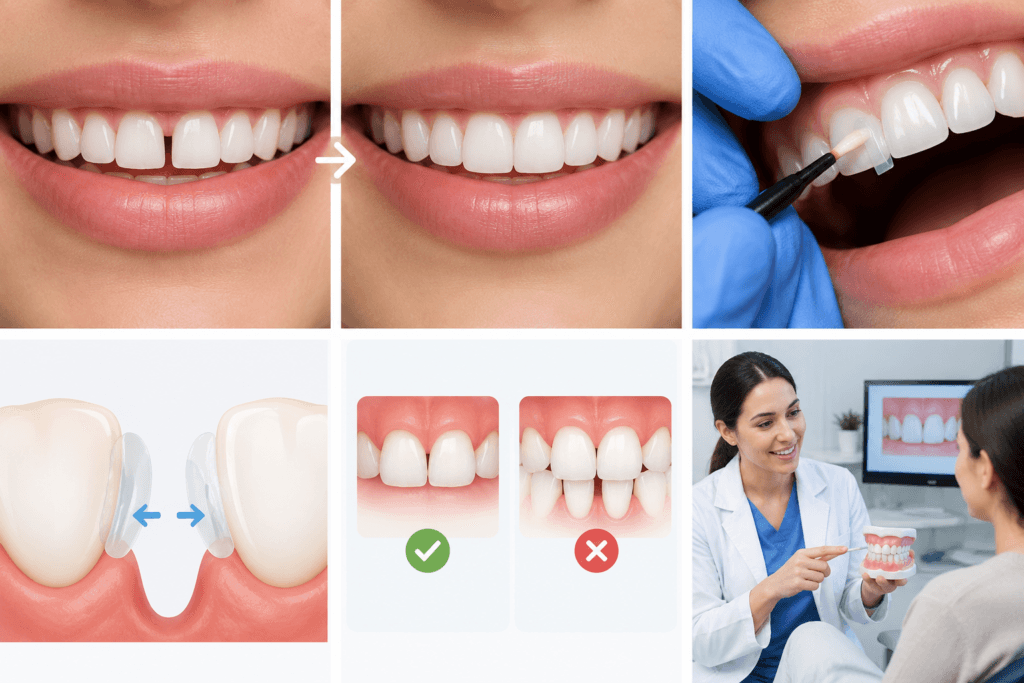
Bonding can close some small gaps by adding composite resin to the sides of the teeth.
It is worth understanding that bonding does not actually move the teeth. Instead, the dentist changes their shape and width so the space appears smaller or disappears.
This can work well when the gap is relatively small and the surrounding teeth are healthy.
If the space is larger or related to the position of the teeth, orthodontic treatment may be a better approach. Your dentist can help determine whether bonding or another treatment is more appropriate.
Can Bonding Make Crooked Teeth Look Straighter?
Sometimes.
If one or two teeth have a minor shape or alignment concern, adding a small amount of composite can improve their appearance. For example, a slightly uneven edge may be reshaped to create a more balanced smile.
Bonding does not move teeth, however.
If teeth are significantly crowded, rotated, or out of position, orthodontic treatment may be needed to change their actual position.
This is one reason a consultation matters before choosing cosmetic treatment. The same concern can have very different solutions depending on what is causing it.
How Does Dental Bonding Work?
The process is fairly straightforward, but the quality of the result depends heavily on how the dentist plans and shapes the restoration.
1. Your dentist examines your teeth
Before bonding, your dentist will look at the tooth you want to change and the surrounding teeth.
They may also assess your gums, bite, existing restorations, and overall oral health.
If you have untreated decay or gum disease, that may need to be addressed before cosmetic bonding.
2. The shade is selected
Your dentist chooses a composite shade that works with your natural teeth.
This is particularly important when bonding a front tooth because the material needs to blend with the surrounding enamel.
If you are considering both whitening and bonding, it is worth discussing the order of treatment with your dentist. The shade of natural teeth can change after whitening, while existing composite bonding does not whiten in the same way.
3. The tooth is prepared
The tooth is cleaned and prepared so the composite can adhere properly.
The amount of preparation varies from case to case. One of the advantages of bonding is that many cosmetic cases require little alteration of the natural tooth compared with treatments that involve more extensive preparation.
4. Composite resin is applied
The dentist places the tooth-coloured composite directly onto the tooth.
The material starts out workable, which allows the dentist to build and shape it according to the tooth’s natural anatomy.
5. The tooth is shaped
This is where the dentist creates the final form.
The resin is carefully shaped so that the tooth does not look overly bulky or noticeably different from the teeth beside it.
The goal is not simply to cover an imperfection. It is to create a shape that fits naturally with the rest of your smile.
6. The resin is hardened
A curing light is used to harden the composite.
Depending on the restoration, the dentist may build the material in layers and cure it as they work.
7. The tooth is polished and checked
Once the shape is complete, the dentist smooths and polishes the bonded area to give the tooth a natural-looking finish.
Your dentist may also check your bite to make sure the restored tooth feels comfortable when your teeth come together. If necessary, the bonded area can be adjusted for a comfortable fit.
The exact steps can vary depending on the tooth and the type of cosmetic correction being made. In general, dental bonding involves preparing the tooth surface, applying tooth-coloured composite resin, shaping the material, hardening it with a curing light, and finishing and polishing the restoration.
How Long Does Dental Bonding Take?
Many dental bonding treatments can be completed during a single appointment, although the time required depends on the number of teeth being treated and the type of changes being made.
Bonding one small chip may take considerably less time than reshaping or improving the appearance of several teeth. Your dentist will also need time to select an appropriate shade, shape the composite, check the result and polish the finished restoration.
After examining your teeth and discussing the changes you want to make, your dentist can give you a better idea of how long your appointment is likely to take.
Does Dental Bonding Hurt?
For many patients, dental bonding is a comfortable procedure because there is usually little tooth preparation involved.
Whether you need local anaesthetic depends on the tooth and the treatment being performed.
If you are particularly sensitive or nervous about dental treatment, let your dentist know before the procedure. They can explain what will happen and discuss ways to keep you comfortable.
How Long Does Dental Bonding Last?
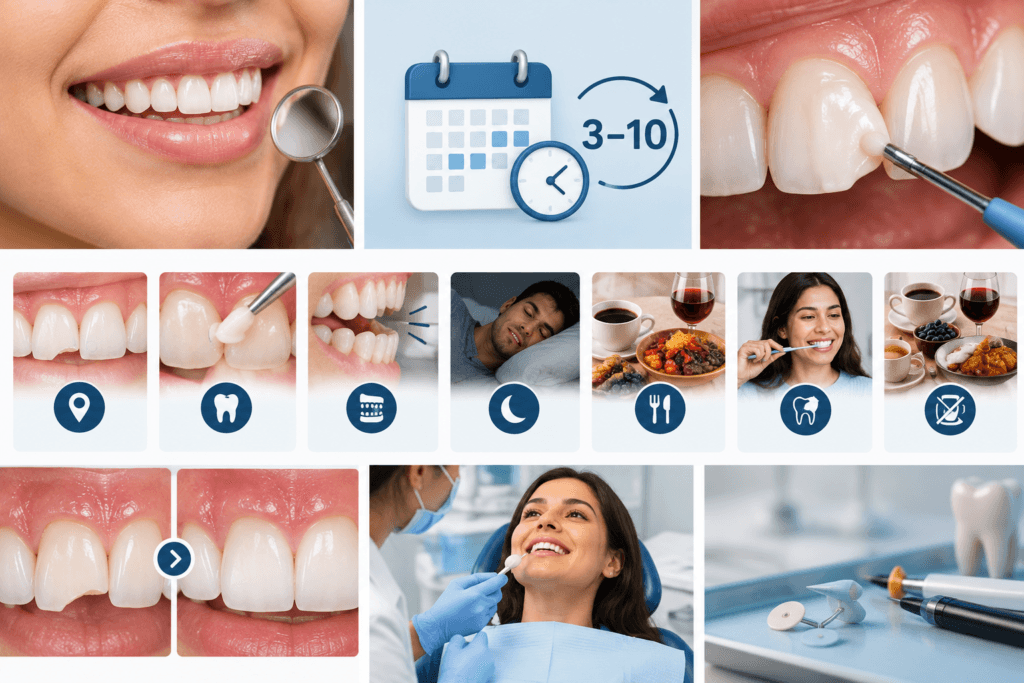
Dental bonding is not considered a permanent restoration. How long it lasts can vary depending on the tooth being treated, the amount of composite used and the forces placed on the restoration.
Several factors can affect the longevity of dental bonding, including:
Where the bonding is placed
How much composite material is used
The amount of biting and chewing pressure on the tooth
Whether you grind or clench your teeth
Your eating and oral habits
How well you maintain your teeth and oral hygiene
Exposure to foods and drinks that can contribute to staining
A small repair on a front tooth may experience different stresses from bonding placed on a tooth that handles heavier chewing forces. Composite materials can also be affected by mechanical stresses over time, which is one reason restorations may eventually require repair or replacement.
For that reason, it is better to think of bonding as a restoration that can provide lasting cosmetic and functional benefits but may eventually need maintenance. Depending on the condition of the bonding, this could involve polishing, a repair, a touch-up or replacement.
Your dentist can assess the condition of existing bonding during routine examinations and let you know whether it continues to be performing well or needs attention.
Does Dental Bonding Stain?
It can.
Composite resin can be more susceptible to staining and discoloration than porcelain. Coffee, tea, red wine, tobacco and other highly pigmented foods and drinks can contribute to changes in the appearance of dental restorations over time. Porcelain veneers generally have greater resistance to staining than composite alternatives.
This does not mean you need to avoid your favourite foods and drinks completely. Good oral hygiene and regular professional cleanings can help maintain the appearance of your teeth and restorations, while your individual habits can also affect how they look over time.
If bonded composite becomes stained or worn, your dentist can assess the restoration and determine whether polishing may improve its appearance. Depending on its condition, the bonding may instead need to be repaired or replaced.
How Should You Care for Bonded Teeth?
Bonded teeth should be cared for much like your natural teeth.
Brush twice a day with fluoride toothpaste and clean between your teeth every day. Continue with your regular dental examinations and professional cleanings so your dentist can check both the bonding and the tooth underneath it.
It is also worth avoiding habits that put unnecessary stress on the material.
For example, do not use bonded teeth to:
- Open packages
- Bite your fingernails
- Chew on pens
- Crack hard objects
- Bite ice
If you grind or clench your teeth, talk to your dentist about whether a night guard could help protect your teeth and any existing bonding.
Dental Bonding vs Veneers
Bonding and veneers can both improve the appearance of teeth, but they work differently.
The Canadian Dental Association describes bonding as generally being used for smaller repairs, while veneers cover the front surface of a tooth.
| Dental bonding | Veneers |
|---|---|
| Uses composite resin | Can use porcelain or composite |
| Usually applied directly to the tooth | Made as a veneer and attached to the tooth |
| Often requires little tooth preparation | Porcelain veneers generally require enamel preparation |
| Often completed in one appointment | Porcelain veneers generally require more than one visit |
| Can be repaired or modified in many cases | Replacement may eventually be required |
| More prone to staining than porcelain | Porcelain is generally more stain resistant |
Neither option is automatically right for everyone.
Bonding may make sense when you want a relatively small change and would prefer a conservative approach. Veneers may be considered when you want a broader change to the appearance of several teeth.
Your dentist can assess the condition of your teeth and discuss what each option would involve.
Dental Bonding vs Crowns
A crown and dental bonding serve different purposes.
Bonding is often used for smaller repairs or cosmetic changes when there is enough healthy tooth structure to support the result.
A crown covers the visible portion of a tooth and may be recommended when a tooth has been significantly weakened, damaged, or restored.
For example, repairing a small chip and rebuilding a tooth that has lost a substantial amount of structure are two very different situations.
If a tooth needs more structural protection than bonding can provide, your dentist may recommend a crown or another restoration.
Dental Bonding vs Teeth Whitening
These treatments solve different problems.
Teeth whitening changes the colour of natural teeth.
Dental bonding adds composite material to change the shape, surface, or appearance of a tooth.
If your only concern is general tooth discolouration, whitening may be worth discussing first.
If one tooth has a stubborn area of discolouration or also needs reshaping, bonding may be considered.
If you are thinking about both treatments, talk to your dentist before starting either one. The order can matter because composite bonding does not respond to whitening in the same way as natural tooth enamel.
Who Is a Good Candidate for Dental Bonding?
Bonding may be suitable if you have healthy teeth and gums and want to make a relatively small change to your smile.
It may be worth discussing if you have:
- A small chipped tooth
- A minor gap
- An uneven tooth edge
- A tooth that looks slightly too short
- A small shape or symmetry concern
- Certain areas of discolouration
Your dentist also needs to consider your bite and oral habits.
Someone who regularly grinds or clenches their teeth may place more stress on composite bonding. Likewise, a tooth with significant decay or structural damage may need treatment before cosmetic bonding is considered.
What Are the Benefits of Dental Bonding?
For the right patient, bonding has several advantages.
It can be a conservative way to improve a tooth because many cases require little alteration of the natural tooth.
It is also versatile. The same basic material can be shaped to repair a chip, change a tooth’s contour, close a small space, or improve the appearance of a selected area of discolouration.
Another advantage is that the treatment can often be completed in one appointment.
And if the composite is damaged later, it may be possible to repair or add to it rather than replacing an entire restoration.
How Much Does Dental Bonding Cost in Brampton?
The cost of dental bonding varies from patient to patient.
The number of teeth being treated, the size of the restoration, the amount of shaping required, and whether additional dental treatment is needed can all affect the cost.
For that reason, a single price quoted online may not tell you what your treatment will actually cost.
It is also worth asking your dental office whether your insurance plan provides any coverage. Coverage can depend on why the bonding is being performed and the details of your individual plan.
Is Dental Bonding Covered by Dental Insurance?
There is no single answer for every patient.
Some insurance plans distinguish between treatment that restores damaged tooth structure and treatment performed primarily for cosmetic reasons.
Your individual plan determines what is covered and how much you may have to pay.
If you have coverage through a private dental plan or the Canadian Dental Care Plan, ask the dental office about the information they can provide before treatment. Revita can discuss the available coverage information with you, but your insurance provider or plan administrator makes the final coverage decision.
Is Dental Bonding Reversible?
Dental bonding is generally considered a conservative treatment because it often requires little or no removal of healthy tooth structure.
This is one of the differences between bonding and some types of veneers. Veneer treatment may require removal of a small amount of enamel to accommodate the restoration, while composite bonding can often be added directly to the tooth after the surface has been prepared.
However, “reversible” should not be taken to mean that every bonded tooth can simply be returned to exactly how it was before treatment. The amount of preparation can vary depending on the tooth, the condition of the enamel and the changes being made.
Before treatment, your dentist can explain whether any tooth preparation is needed in your particular case and how that compares with the preparation required for veneers.
Frequently Asked Questions About Dental Bonding
Dental bonding can last for several years. Cleveland Clinic gives a typical range of about three to 10 years, but the actual lifespan depends on factors such as the location of the bonding, your bite, oral habits, and how well you care for your teeth.
Yes. Small chips are one of the common uses for dental bonding. Composite resin can be added to the missing area and shaped to restore the tooth’s appearance.
Bonding can close some small gaps by changing the shape of the teeth around the space. Larger gaps or gaps caused by tooth positioning may be better addressed with orthodontic treatment.
It can. The dentist selects a suitable shade and shapes the composite to follow the natural contours of the tooth. The final result depends on the condition of the tooth, the amount of bonding required, and the dentist’s technique.
Your dentist will let you know when you can eat normally. Once the material has been cured and your bite has been checked, most patients can return to their normal routine. Avoiding very hard foods and habits that put excessive force on the bonded tooth can help protect it.
Still Not Sure Which Option Is Right for You?
Composite bonding and veneers can both improve the appearance of your smile, but they are not interchangeable treatments.
If you are still confused about which option may suit your teeth, your goals and the amount of change you want, discussing your options with a dentist can help you make a more informed decision.
Still have questions? Learn more about your options with Revita Dentistry, Most trusted dental practice in Brampton.