
- Reviewed by
Table of Contents
What Makes You a Good Dental Implant Candidate?
A good dental implant candidate generally has healthy gums, enough jawbone to support an implant and overall health that allows appropriate healing. Being able to clean around the replacement tooth and attend follow-up appointments also matters.
Existing dental problems do not necessarily rule out implants, although some may need treatment first. Other concerns may change the recommendation. Age, bone loss or a medical diagnosis alone does not provide a definite answer about whether you qualify.
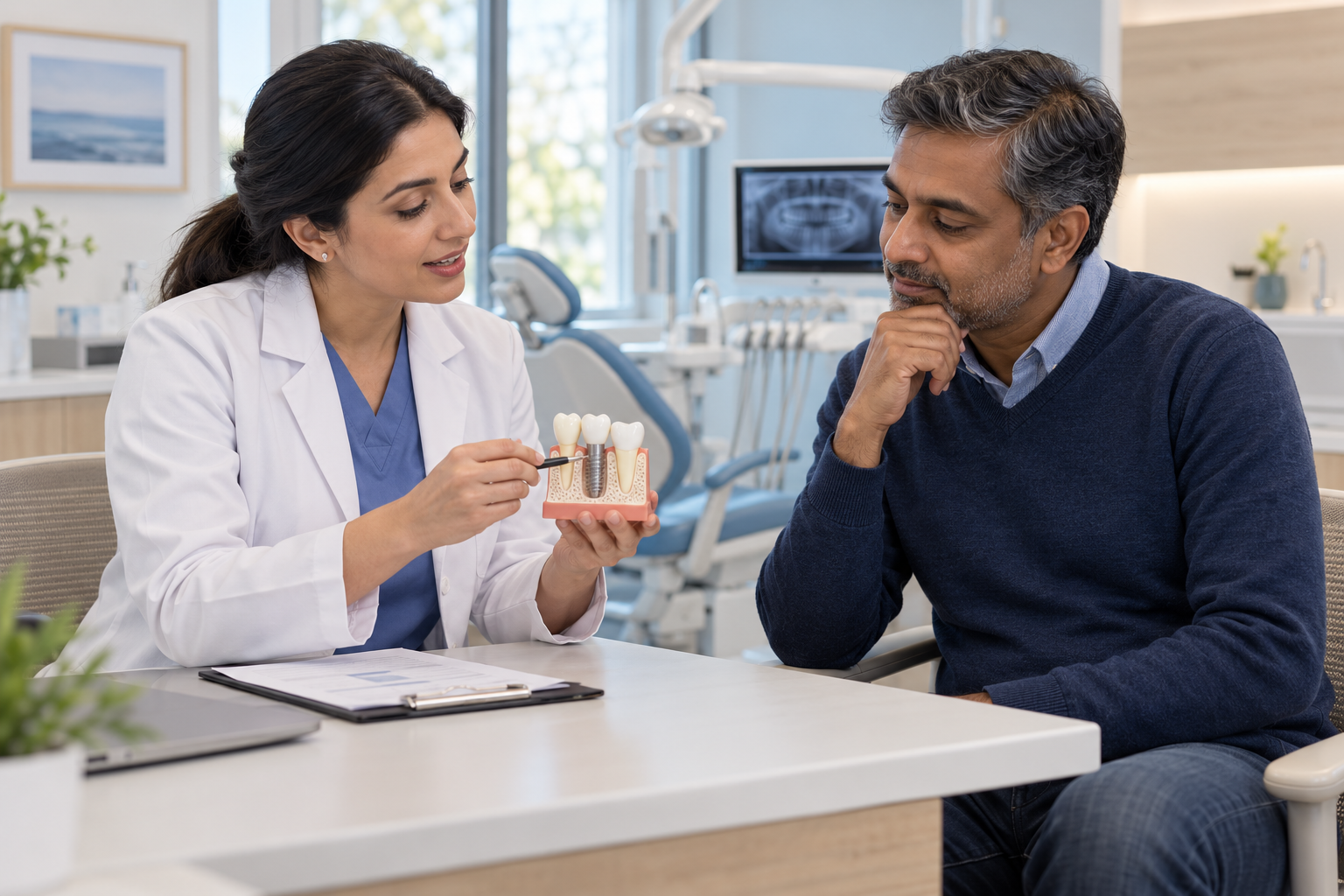
If you are considering replacing a missing tooth, a dental implant consultation in Brampton at Revita Dentistry can help you understand your options and whether any preparation is needed.
Healthy Gums and Controlled Dental Disease

Healthy gum tissues help provide a suitable environment for implant treatment. Active gum disease or an existing dental infection may need treatment before an implant is placed.
A history of gum disease matters too. Even if your gums currently feel comfortable, tell your dentist about previous treatment so they can assess whether the condition is stable.
The tissues around an implant can develop inflammation and disease. Daily cleaning and professional monitoring remain necessary after treatment.
If limited hand movement or another health concern makes cleaning difficult, mention this during your consultation. Your dental team can discuss suitable cleaning aids and whether the planned replacement would be manageable for you.
Enough Bone to Support the Implant
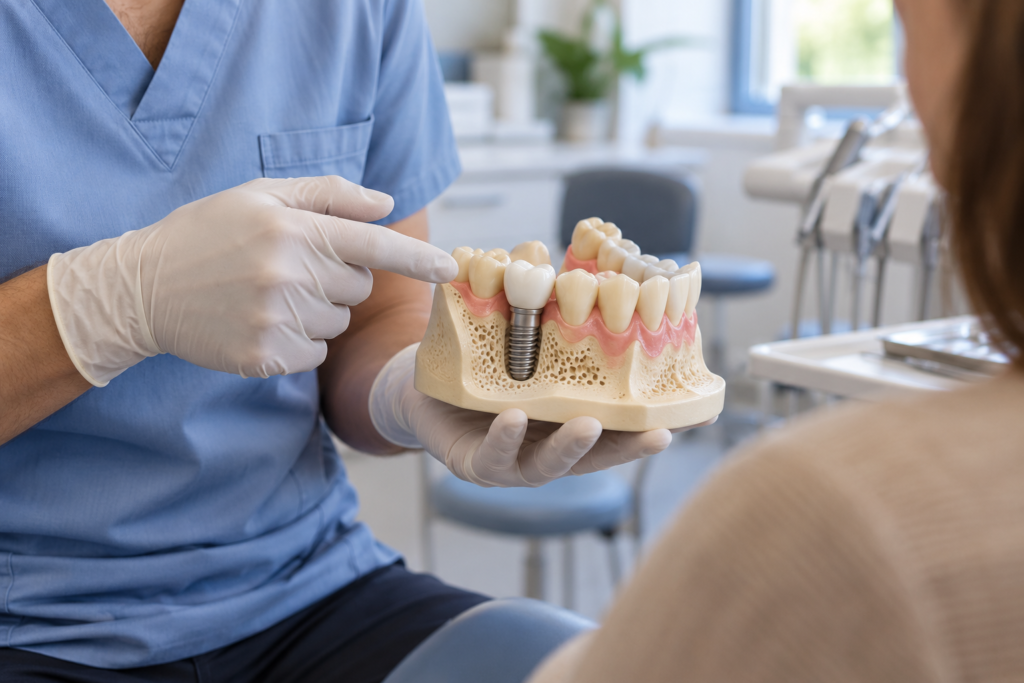
An implant needs adequate jawbone support in the area where it will be placed. Your dentist assesses the available bone and surrounding anatomy when planning its position.
Bone loss does not automatically rule out treatment. In selected cases, bone grafting may help improve the foundation for an implant. However, grafting is not necessary for everyone and does not guarantee that an implant will be suitable.
You cannot judge bone support by looking at the gap or feeling the gums. An examination and appropriate imaging help show what is available beneath the surface.
General Health That Allows Appropriate Healing
Your dentist needs to know about medical conditions, previous treatments and any recent changes in your health.
For example, diabetes requires individual consideration. Poorly controlled blood glucose can raise concerns about infection and healing, but having diabetes does not automatically exclude someone from implant treatment.
Your dentist may need information from your physician before recommending whether or when to proceed. What matters is how your condition affects the proposed treatment, rather than the diagnosis alone.
Can You Get Dental Implants If You Smoke?
Smoking can interfere with healing and increase the risk of implant failure. It does not automatically rule out treatment, but it may affect your dentist’s recommendation.
Tell your dentist how often you smoke and ask how this changes the risks in your case. You can also discuss what stopping support may be appropriate.
A brief pause in smoking should not be treated as a guarantee that the risk has disappeared. Your dental team can explain how tobacco use affects treatment planning and ongoing implant care.
Can Your Medications Affect Implant Suitability?

Bring an up-to-date list of prescription medicines, over-the-counter medicines and supplements. Include relevant medicines you have taken in the past.
Tell your dentist about osteoporosis medicines, cancer treatments, blood thinners and medicines that affect your immune system. These treatments can affect planning in different ways, so the medicine names and treatment history are useful.
Some bone-modifying medicines, including bisphosphonates and denosumab, are associated with medication-related osteonecrosis of the jaw, a rare but serious condition involving damage to the jawbone. The implications depend on the medicine, dose, reason for treatment and treatment history.
Taking an osteoporosis medicine does not, by itself, determine whether you can have implants. Your dentist needs to assess your circumstances and may coordinate with your prescribing clinician.
Do not stop or change prescribed medication yourself.
Can You Be Too Old or Too Young for Dental Implants?

Older age alone does not make someone unsuitable for implants. Your health, bone support, ability to undergo treatment and capacity for ongoing care are more useful considerations than your age alone.
For younger patients, jaw development matters. Implant treatment is generally postponed until jaw growth is complete.
There is no single birthday that confirms readiness for everyone. Your dentist needs to assess development and timing individually.
How Does Your Dentist Check Whether You Qualify?
An implant assessment brings together your health history, examination findings and appropriate imaging. It should also give you an opportunity to explain what you want from treatment.
The assessment generally includes:
- Your medical and dental history: Previous dental problems, gum treatment, health conditions, medications and tobacco use.
- Your concerns and goals: What you hope to improve, such as chewing, appearance or the stability of a replacement tooth.
- An examination: Your gums, remaining teeth, bite and the space available for the planned restoration.
- Appropriate imaging: X-rays and, when indicated, three-dimensional imaging to assess bone and relevant anatomy.
- A discussion of options: Any preparation, important risks, alternatives and maintenance requirements.
Being suitable for an implant does not mean treatment is risk-free. Ask which risks are most relevant to you and how they affect the recommendation.
If implants appear appropriate, Revita’s information about dental implant surgery explains the placement stage and what it may involve.
What If You Are Not Ready for an Implant Yet?
If treatment is postponed, ask what needs to change before your suitability can be reassessed. This might involve treating gum disease, investigating bone grafting or obtaining further medical information.
Some concerns may be addressed through preparation. Others may make another tooth-replacement option more appropriate.
Before leaving the consultation, make sure you understand:
- What is affecting your suitability.
- Whether further treatment could change the recommendation.
- What the next step involves.
- Which alternatives are available.
If an implant is not recommended, ask your dentist to explain why and discuss the benefits and limitations of the other options.
Frequently Asked Questions
Wearing dentures does not automatically rule out implant treatment. In suitable cases, implants can support or help stabilise a denture. Your dentist would need to assess your mouth and discuss whether an implant-supported replacement fits your needs.
No. Attaching a tooth to an implant immediately is a separate clinical decision. Some treatment plans require the implant to heal before a tooth is attached. If healing time is needed, your dentist may discuss a temporary replacement and explain how it would be supported.
Possibly. A dentist may provide implant treatment or refer you to a dental specialist, depending on the case and the care required. A referral may be part of assessment or treatment planning and does not, by itself, mean you are unsuitable for implants.
A consultation gives you an opportunity to understand the recommendation and ask questions. You can take time to consider the proposed care, alternatives and expected costs before deciding whether to proceed.
Understanding Your Options at Revita Dentistry
You do not need to know whether you qualify before arranging an assessment. Bring your questions, your medication information and any concerns about treatment or ongoing care.
If you are considering dental implants or feel unsure about your next step, connect with Revita Dentistry to discuss your concerns and arrange an assessment of your tooth-replacement options.