

- Reviewed by
Table of Contents
What to Do for a Broken or Chipped Tooth Right Away
A broken or chipped tooth can feel alarming, especially after a fall, sports injury or hard bite. If you are wondering what to do for a broken tooth, protect the area, save any piece you can find, and contact a dentist promptly for advice. A small chip may be less urgent, but it still deserves an assessment. A deeper break can expose sensitive tissue or weaken the tooth even when it does not hurt much at first.
If you are dealing with a tooth injury now, an emergency dentist in Brampton can help assess how urgently you need to be seen and what to do before your visit. If you have trouble breathing, uncontrolled bleeding, a suspected jaw fracture, or a serious injury affecting your face or head, seek emergency medical care immediately.
What this guide can help you decide
After a tooth injury, avoid making it worse and contact a dental office. Revita’s emergency dental care guidance covers general before-you-arrive steps. This guide helps you understand the visible damage, the symptoms to report, and why some breaks need more urgent attention than others.
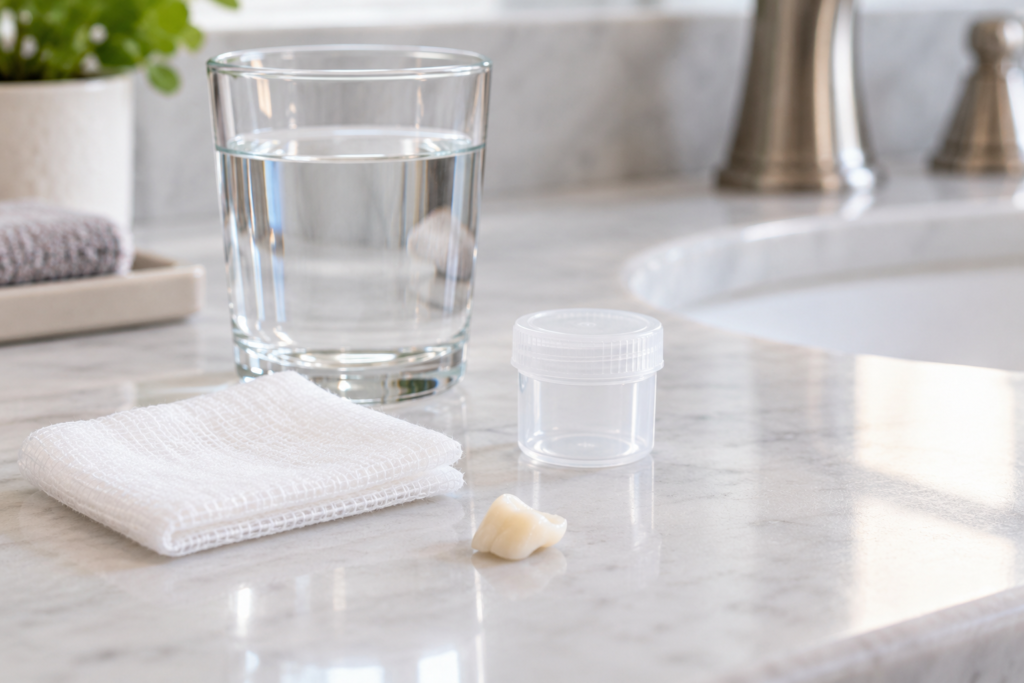
Do not try to glue a tooth piece back yourself or keep biting on the tooth to test it. If you find a fragment, keep it and bring it to your appointment. A sharp edge, a new bite change or a previously restored tooth can all be useful details when the dental team assesses the injury.
How urgent is a broken or chipped tooth?
A minor, smooth chip without pain may be less urgent, but it should still be assessed. The dentist can check whether the edge is sharp, whether a crack is present, and whether the tooth’s bite has changed. Damage that looks small can sometimes extend further than it appears.
Urgent dental assessment is generally appropriate when a large section has broken away; the tooth is painful, temperature-sensitive, loose or displaced; the centre of the tooth looks pink or red; or the injury follows a strong impact. Worsening pain, facial swelling, fever, a bad taste, or pus also needs prompt professional evaluation.
Pain alone is not a reliable way to judge a fracture. A deep crack may cause little discomfort at first, while a small chip can feel very sharp. The goal of the call is not to diagnose the tooth at home. It is to give the dental team enough information to advise you safely.
A chip, a crack and a broken tooth are not the same thing
People often use these terms interchangeably, but the pattern of damage affects how a dentist evaluates it.
| What you notice | What it may mean | Why an examination helps |
|---|---|---|
| A small piece missing from the edge | A superficial enamel chip or a fractured filling | The edge can be smoothed or restored, and the dentist can check for deeper damage. |
| A line or pain when biting | A crack that may extend beyond what is visible | Cracks can be difficult to see and may need bite tests, light, X-rays or other assessments. |
| A large section missing | A fracture involving enamel and dentin, and sometimes the pulp | The tooth may need protection or more involved treatment depending on the depth and location. |
| A tooth that is loose or displaced | Injury to the tooth-supporting tissues or jaw area | Prompt assessment can help determine the next step and whether other teeth are affected. |
The visible amount of damage does not always tell the whole story. A tooth can crack below the gumline, while a small chip can feel sharp but be straightforward to manage. A dentist will examine the tooth, gums, bite and nearby teeth before recommending care.

Changes to notice after the injury
Make a brief note of what changes after the break. Increasing sensitivity to hot or cold, pain when you bite or release your bite, a tooth that begins to look darker, and a bite that no longer feels even are all worth reporting. They do not confirm a diagnosis on their own, but they can help the dentist understand how the injury is affecting the tooth over time.
Avoid repeatedly checking for these symptoms by biting hard or exposing the tooth to extreme temperatures. If symptoms worsen, call the dental office again rather than waiting for your scheduled appointment.

What to tell the dental office when you call
The details you provide can help the team decide how quickly you should be seen. Be ready to describe when the injury happened, what caused it, whether you found a fragment, and whether the tooth is painful, sensitive, loose or changing colour. Mention bleeding, swelling, a cut lip or cheek, and whether your teeth now meet differently. If you have a photo taken safely after the injury, it may be helpful, but do not delay calling to take one.
It is also useful to say whether the tooth already had a filling, crown, veneer or previous root canal treatment. A break in a restoration can look similar to a break in the tooth itself, but the assessment and next steps may differ.
Managing pain and sensitivity until you are seen
Sensitivity after a fracture may come from exposed dentin, the layer beneath enamel, or irritation to the tooth’s nerve. Avoid triggers that make it worse, including ice-cold drinks, very hot food and pressure from chewing. Use a soft toothbrush and keep the area clean, but do not brush aggressively over a tender or bleeding area.
For pain relief, ask a pharmacist or healthcare professional which over-the-counter option is appropriate for you, particularly if you take blood thinners, have relevant medical conditions, are pregnant, or are treating a child. Follow the product label. Avoid putting products directly on the gums or teeth unless a dental professional recommends them.

What the assessment is designed to find
At the visit, the dentist will assess the fracture, the tooth’s response, nearby tissues and your bite. X-rays or other tests may be used when clinically indicated. The purpose is to determine whether the damage is limited to the outer tooth surface or whether deeper structures need protection.
The repair depends on the fracture’s depth, location, bite forces and whether the tooth can be restored predictably. For a fuller explanation of repair approaches, see Revita’s page on cracked and chipped tooth treatment.
Common mistakes to avoid after a tooth breaks
- Do not delay because there is no pain. Some injuries become clearer over time.
- Do not chew hard foods, use the injured tooth to open packaging, or bite your nails.
- Do not use glue, filling material from a hardware store, or a sharp object to remove a loose piece.
Frequently Asked Questions About Dental Bonding
Enamel does not grow back. A very small chip may not need extensive treatment, but the dentist can decide whether smoothing, bonding, monitoring or another option is appropriate. The key question is not only appearance but whether the tooth is sharp, weakened, decayed, cracked or causing symptoms.
Contact a dentist anyway. Lack of pain does not reliably rule out a crack, a change in the bite or damage to the tooth’s internal tissues. Note any sensitivity, roughness, colour change or pain when you release a bite, even if it is mild.
Usually, soft foods on the opposite side are the safer choice until you have dental advice. Avoid hard, crunchy, sticky and very hot or cold foods. If biting causes pain or the tooth feels loose, do not chew on it.
You can still be assessed and treated without it. Let the dental office know that the fragment is missing and explain what happened. Do not put yourself at risk by searching in an unsafe area or attempting to retrieve a piece from your throat.
Next step after a tooth injury
A broken tooth is not always a medical emergency, but it is rarely something to simply watch and forget. Rinse gently, save the fragment if you can, protect the area and contact a dental professional for advice. Quick assessment helps identify whether the tooth only needs a simple repair or needs more urgent protection.
Still unsure how urgent your broken or chipped tooth may be? Visit Revita Dentistry to explore your care options.