

- Reviewed by
Table of Contents
What Happens During a Dental Cleaning? What to Expect at Your Appointment
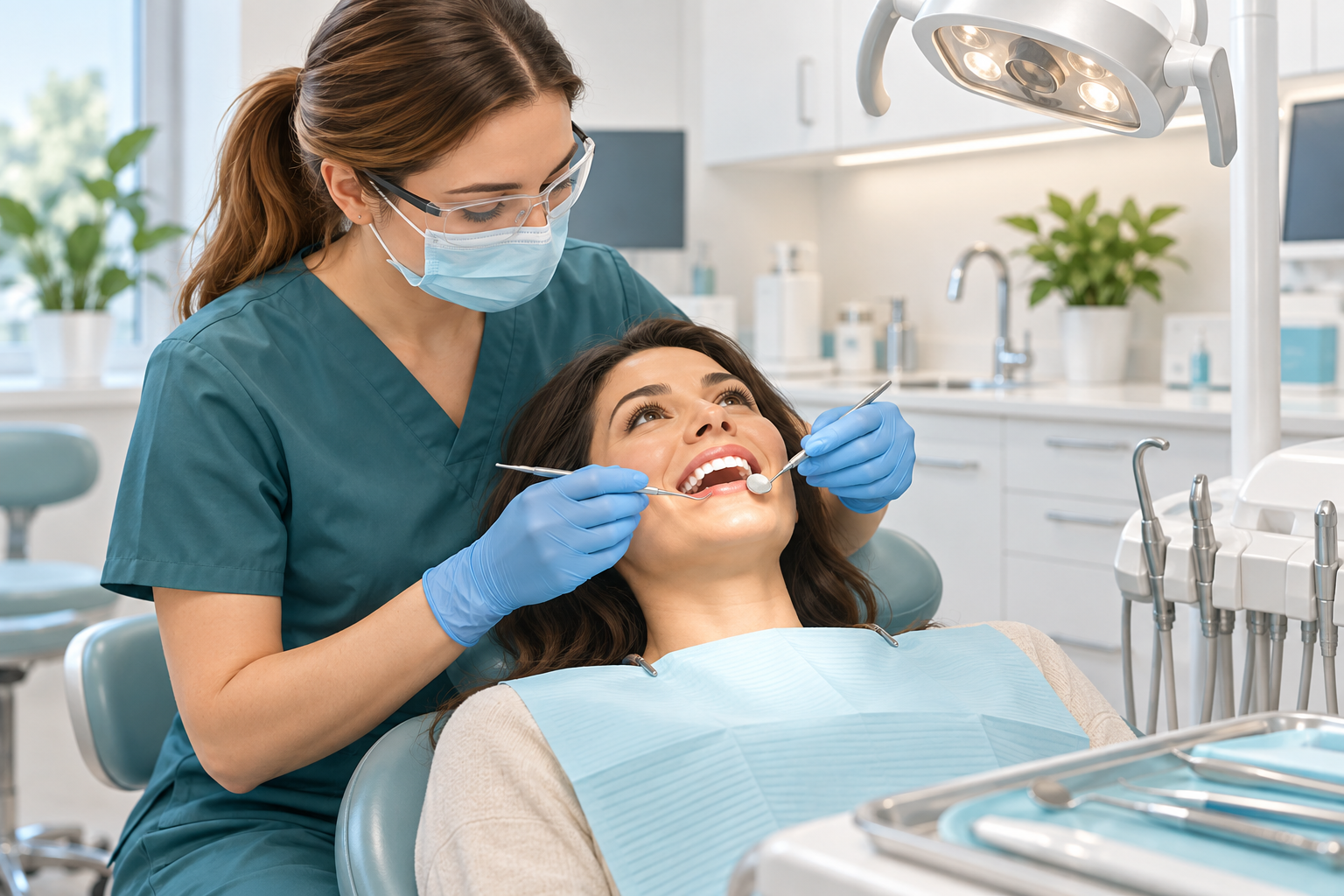
Most professional dental cleanings follow a similar pattern: the dental team reviews relevant health changes, assesses your teeth and gums, removes plaque and tartar buildup, and gives advice for looking after your mouth at home. The exact sequence can vary based on your oral health, the amount of buildup present, and whether you are also due for an examination.
If it has been a while since your last visit, it is normal to wonder what the appointment will feel like or whether you will be told that you need more treatment. A cleaning is not a test you pass or fail. It is a preventive visit that helps the dental team understand what is happening in your mouth and support your next steps.
The typical steps of your dental cleaning visit
At a routine appointment, your visit may include:
- Updating your health and dental history
- An assessment of your teeth and gums
- Removal of plaque and hardened tartar, also called calculus
- Polishing or cleaning of tooth surfaces when appropriate
- Advice about brushing, cleaning between teeth, and your next visit
Not everyone needs the same type of appointment. Someone with little buildup and healthy gums may have a different experience from someone with sensitive teeth, braces, implants, dry mouth, or a history of gum disease.

Updating your health information
Before the cleaning begins, you may be asked about changes to your health, medications, allergies, or dental concerns. This information helps the dental team plan care safely and understand changes that may affect your mouth, such as dry mouth, bleeding, sensitivity, or healing.
It is a good time to mention anything you have noticed since your last visit. That might include gums that bleed while brushing, a new sensitivity to cold, persistent bad breath, jaw soreness, a chipped tooth, or anxiety about dental treatment. These are useful details, not minor complaints. They help the clinician decide where to look more closely and what guidance may help.
Assessing your teeth and gums
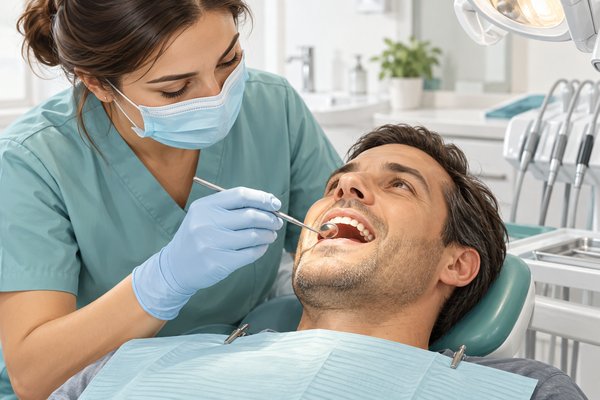
The dental team may look for plaque deposits, tartar buildup, signs of gum inflammation, visible decay, worn teeth, and damaged fillings or crowns. They may also note areas where plaque tends to collect, such as between crowded teeth, around restorations, or near the gumline.
At Revita Dentistry, a cleaning appointment includes a comprehensive oral examination by the dental team. The cleaning and examination have different roles: the cleaning removes buildup and supports oral hygiene, while the examination assesses oral health and helps identify concerns that may need monitoring, diagnosis, or treatment.
This part of the visit can also bring attention to changes that are easy to miss at home, such as gum inflammation, recurring buildup, tooth wear, visible cavities, damaged restorations, or places where food and plaque collect. Seeing a potential concern is not the same as making a diagnosis. It may lead to reassurance, tailored home-care advice, or a recommendation for a more focused assessment.
Your dentist decides whether any additional evaluation or dental X-rays are appropriate based on your symptoms, history, clinical findings, and previous imaging. X-rays are not automatically needed at every cleaning.
Removing plaque and tartar
This is the step most people picture when they think about a dental cleaning. Plaque is a soft, sticky film that forms on teeth. Brushing and cleaning between teeth can help remove it at home. When plaque remains for long enough, minerals in saliva can contribute to hard deposits called tartar or calculus. Once tartar is firmly attached, it is difficult to remove with a toothbrush alone.
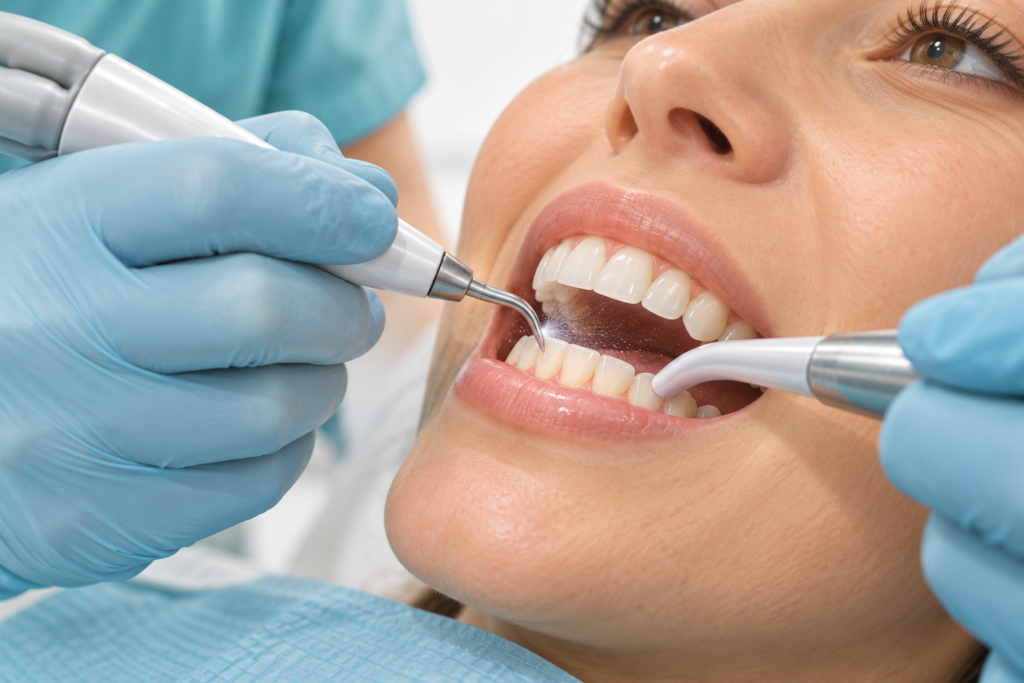
During scaling, a dental hygienist or dentist uses carefully controlled instruments to remove plaque and tartar from accessible tooth surfaces, including around the gumline. Depending on the buildup and the area being cleaned, they may use hand instruments, an ultrasonic instrument that vibrates, or a combination. Water and suction are commonly used with ultrasonic instrumentation.
You may hear a scraping or humming sound during this step. The sound itself does not indicate that anything is wrong. Some people feel light pressure or sensitivity, particularly around inflamed gums, exposed roots, or areas with heavier buildup. Let the clinician know if you need a pause or if something feels sharp or painful. They can assess the cause and adjust the approach when possible.
In some cases, a person may need a different periodontal treatment plan rather than a standard cleaning. That depends on the individual findings. Your dentist can explain the reason for any recommendation and what it involves.
To learn about the appointment option itself, visit Revita’s page on professional dental cleaning in Brampton. This article focuses on the typical patient experience during a cleaning.
Cleaning and polishing tooth surfaces
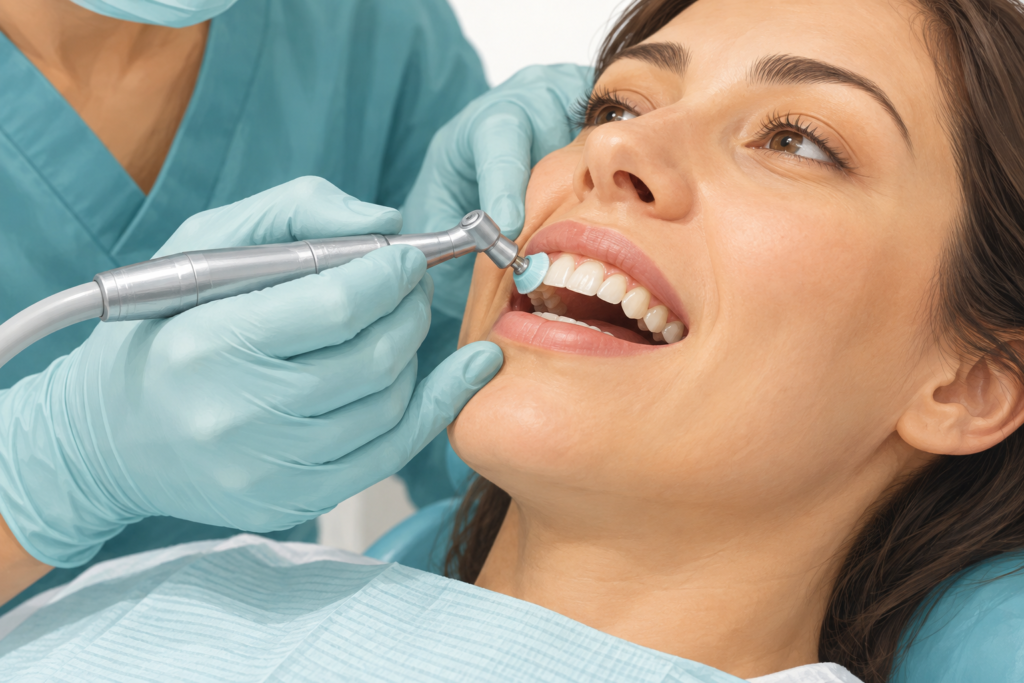
After scaling, the clinician may clean or polish the tooth surfaces. Polishing can help remove residual surface deposits and some external staining. It is not a whitening treatment and does not change the natural shade of enamel.
The exact approach can depend on factors such as tooth sensitivity, existing restorations, implants, and the condition of the mouth. If you have crowns, veneers, bonding, implants, or a concern about sensitivity, mention it before treatment. Your dental professional can determine which products and techniques are appropriate for you.
Guidance for home care and your next visit
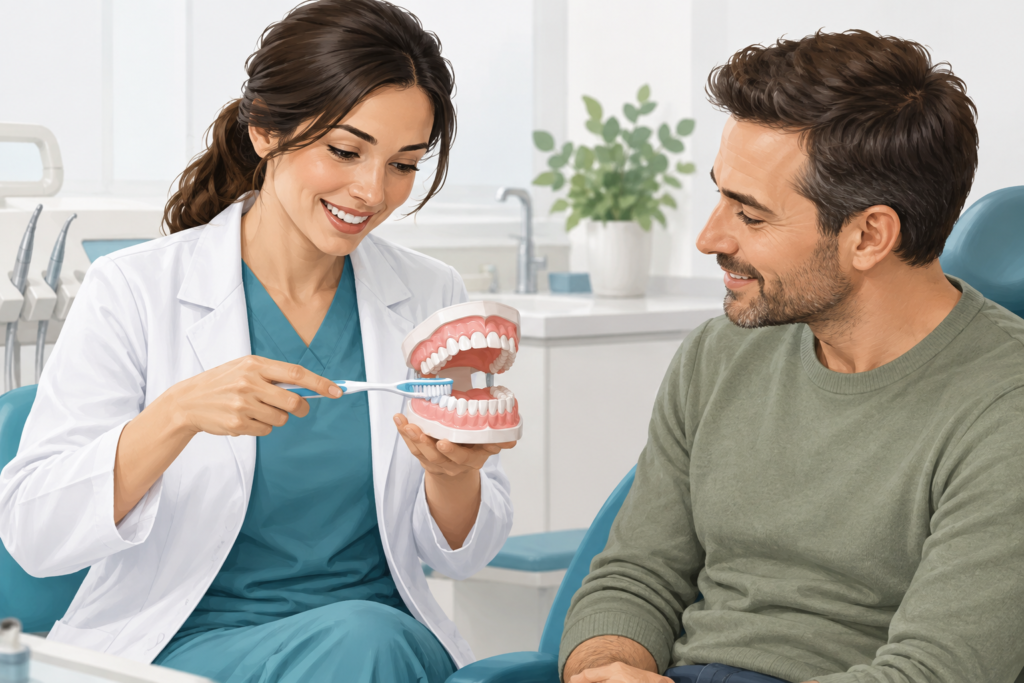
Before you leave, the dental team may discuss the areas that need more attention at home. They might demonstrate a brushing angle, discuss cleaning between teeth, or suggest products suited to your needs. A specific question often gets a more useful answer than a general one: “Which area should I focus on most?”
They may also recommend when to return. Recall intervals are individualized. They can be influenced by gum health, tartar buildup, tooth decay risk, dry mouth, tobacco use, orthodontic appliances, medical factors, and your previous dental findings. A recommendation to return sooner does not necessarily mean something is seriously wrong. It may allow the team to monitor a concern or support gum health more closely.
Does dental cleaning hurt?
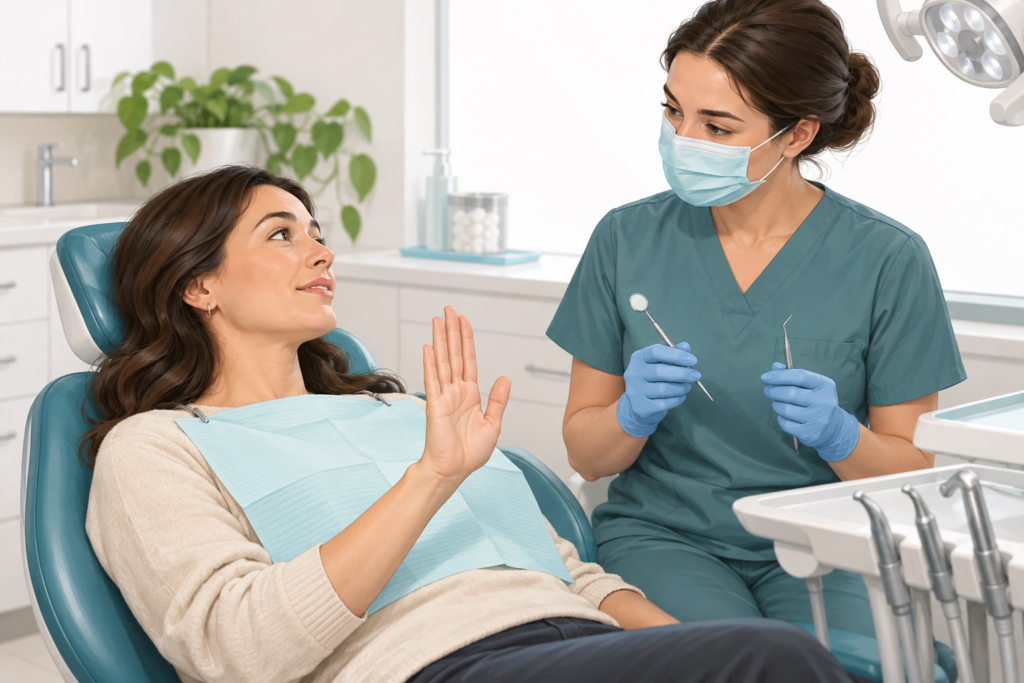
Many people tolerate routine cleanings well, but comfort can vary. Sensitivity may be more noticeable if your gums are inflamed, your tooth roots are exposed, there is substantial buildup, or you already have sensitive teeth. Dental anxiety can also make ordinary sensations feel more intense.
Tell the dental team before the appointment begins if you are nervous or have had a difficult cleaning in the past. You can ask for breaks or for an explanation of each step. If you feel persistent or significant pain, do not try to push through silently. The clinician should know so they can evaluate what you are feeling.
After your visit
Your teeth may feel especially smooth afterward. Some people experience temporary gum tenderness or sensitivity to cold foods and drinks, particularly if there was inflammation or significant buildup. Follow any instructions for fluoride, desensitizing products, local anesthetic, or other treatment provided by your dental team. If symptoms are pronounced, persist, or concern you, contact the office for advice.
Frequently Asked Questions About Dental Bonding
No. A cleaning removes plaque and tartar and supports oral hygiene. An examination assesses oral health and identifies concerns that may need monitoring, diagnosis, or treatment. The two are often scheduled together, but they are distinct parts of care.
Appointment length varies. It can depend on whether you are also having an examination, the amount of buildup, the condition of your gums, your dental history, and whether other care is needed. Your dental office can give the most accurate estimate for your visit.
For many routine cleanings, patients can eat afterward. If fluoride, a desensitizing product, local anesthetic, or another treatment was used, follow the instructions from your dental team. If your mouth feels numb, wait until normal feeling returns before chewing to avoid biting your cheek or tongue.
Bleeding can occur when gum tissue is inflamed or while an area is being cleaned. Other factors may contribute as well. Discuss bleeding with the dental team, especially if it also happens when you brush or clean between your teeth at home.
Feel prepared for your next dental cleaning
Professional dental cleanings are individualized preventive visits. They help remove buildup that is difficult to manage at home, give the dental team an opportunity to assess changes, and provide practical advice for the weeks ahead.
Still have questions about what to expect at your next visit? Explore your dental-care options with Revita Dentistry.