

- Reviewed by
Table of Contents
How Often Should You Get a Dental Exam? A Risk-Based Guide
Many adults are seen about every six months, but your dentist may recommend a different interval based on your risk of cavities, gum disease and other oral-health needs.
That recommendation is not simply a routine reminder. It is based on what your dentist sees in your mouth, your dental history and whether anything needs closer attention. Someone with healthy gums and a low history of cavities may not need the same schedule as someone managing gum disease, dry mouth or recent dental treatment.
At Revita Dentistry, your dentist can recommend a dental exam schedule based on your current needs rather than relying on a one-size-fits-all rule.

What determines how often you need a dental exam?
A dental exam gives your dentist an opportunity to assess your teeth, gums, bite, existing dental work and oral tissues. It also allows you to discuss changes that may affect your oral health, including new medications, medical conditions, pregnancy, sensitivity or difficulty keeping certain areas clean.
Your recommended recall interval may be influenced by:
- Your history of cavities or gum disease
- Gum bleeding, plaque buildup or tartar accumulation
- Dry mouth, including dry mouth linked to medications or health conditions
- Smoking or tobacco use
- Diabetes and other health conditions that can affect oral health
- Pregnancy-related changes in the gums
- Braces, implants, dentures, crowns or other dental work that needs monitoring
- Recent treatment or an active concern that needs follow-up
For example, a patient with no recent cavities but repeated gum bleeding may need a different schedule than a patient whose gums are stable but who has recently had extensive restorative work. The purpose is not to assign everyone to the same interval. It is to give each patient a realistic plan for monitoring and maintaining their oral health.
Regular exams and recommended cleanings can support prevention and early detection. They cannot guarantee that dental problems will never develop, but they can help identify changes before they become more noticeable or uncomfortable.
If you are unsure when you are due, you can book a dental exam in Brampton to discuss the interval that makes sense for your oral health.
When might you need dental exams more often?
Some people benefit from closer monitoring because their risk of new or recurring dental problems is higher. More frequent visits do not necessarily mean that something is seriously wrong. In many cases, they simply give your dentist a chance to check whether prevention, home care or previous treatment is working as intended.
Gum disease or ongoing gum inflammation
Patients with gum disease may need regular periodontal monitoring. Gum disease can affect the tissues that support the teeth, and its management often depends on ongoing assessment rather than a single treatment appointment.
Your dentist may look for changes such as bleeding, swelling, gum recession, pocket depths or new areas of plaque and tartar buildup. The recommended interval depends on the condition of your gums, your response to treatment and how effectively plaque is being controlled between visits.
If your gums bleed when you brush or floss, it is worth mentioning it at your appointment. Bleeding can have several causes, and your dentist can determine whether it is related to inflammation, brushing habits, medication use or another concern.
A history of frequent cavities
If you have developed cavities regularly, your dentist may recommend shorter intervals to monitor your teeth and reduce the chance that a new area of decay goes unnoticed.
Cavity risk can be influenced by several factors. Frequent exposure to sugary or acidic drinks, inconsistent cleaning between teeth, dry mouth, previous cavities and difficulty cleaning around dental work can all matter. Your dentist may discuss practical steps such as fluoride use, dietary habits, brushing technique and ways to clean areas that are easy to miss.
A shorter recall interval is not a punishment for having cavities. It is simply a more tailored approach when your dental history suggests that closer follow-up could be helpful.
Dry mouth
Saliva helps protect the mouth by clearing food debris and helping to neutralize acids. When saliva flow is reduced, the risk of tooth decay may increase, particularly around the gumline or the edges of existing fillings and crowns.
Dry mouth can be associated with some medications, health conditions, mouth breathing, dehydration and certain medical treatments. It may feel like a sticky or dry mouth, but some people do not immediately recognize the change.
Tell your dentist if your mouth feels dry more often than usual, if you need water frequently while eating or speaking, or if you have noticed a change in your breath or comfort. Your dentist can help identify possible contributing factors and recommend appropriate preventive care.
Orthodontic treatment or complex dental work
Braces and other orthodontic appliances can make brushing and cleaning between teeth more difficult. Food and plaque can collect around brackets, wires and attachments, so regular monitoring may be useful throughout treatment.
Implants, crowns, bridges, dentures and recent restorative treatment may also need periodic review. Your dentist can check how the restoration is functioning, how the surrounding gums are responding and whether there are areas that need extra attention at home.
This does not mean that dental work is expected to fail. It means that ongoing care helps your dental team identify small changes and guide you on how to keep the area clean.

Can lower-risk patients be seen less often?
Possibly. Some patients with stable oral health may be advised to have a longer interval between exams.
A lower-risk profile may include healthy gums, a low history of cavities, effective brushing and cleaning between teeth, no active symptoms and no treatment requiring closer follow-up. It may also include a history of attending as recommended, so the dentist has a clearer picture of how stable your oral health has been over time.
Even then, the interval should be based on your dentist’s assessment, not assumed from how your teeth feel. A person can have no pain and still have a concern that is difficult to notice without an examination.
Your recommended schedule can also change. A new medication, pregnancy, a change in gum health, a recent cavity or a new restoration may mean that closer monitoring is appropriate for a period of time. If your oral health becomes stable again, your dentist may adjust the interval.

What about children?
Children should see a dentist on an individualized schedule. Their teeth, jaws and oral habits can change quickly as they grow, and their risk of cavities may be different from that of an adult.
A child’s dentist may consider brushing ability, diet, fluoride exposure, cavity history, crowding, thumb-sucking habits and orthodontic development when recommending future visits. Young children often need help with brushing, even when they are becoming more independent, because cleaning all tooth surfaces well can take practice.
Parents may also want to ask about areas that are difficult to clean, such as the grooves of back teeth or spaces where teeth are close together. The goal is to help a child build comfortable dental habits and address concerns at an early stage, not to make visits feel intimidating.

Does pregnancy affect dental visits?
Pregnancy can be associated with changes in the gums, including swelling, sensitivity or bleeding. Some people notice that their gums become more reactive to plaque during pregnancy, even when their home-care routine has not changed.
If you are pregnant and notice a change in your oral health, let your dentist know. It is helpful to share any relevant medical information, medications and concerns about your comfort during appointments.
Your recommended appointment timing will depend on your symptoms, overall health and any care you may need. Routine dental care decisions should be made with your dental team and, when relevant, your prenatal healthcare provider.
If your teeth feel fine, do you still need an exam?
Yes. Some dental concerns can develop without causing obvious pain or visible changes in their early stages. Small cavities, early gum inflammation and issues around existing dental work may not be easy to identify at home.
A dental exam is also an opportunity to ask about symptoms that may seem minor but are persistent, such as sensitivity to cold, bleeding gums, jaw discomfort, a rough filling edge or food regularly catching in the same area.
Contact a dentist sooner rather than waiting for your next routine exam if you have significant tooth pain, facial swelling, uncontrolled bleeding, a knocked-out tooth or symptoms that may suggest an infection.
Facial swelling accompanied by trouble breathing or swallowing requires immediate emergency medical attention.
What happens during a dental exam?
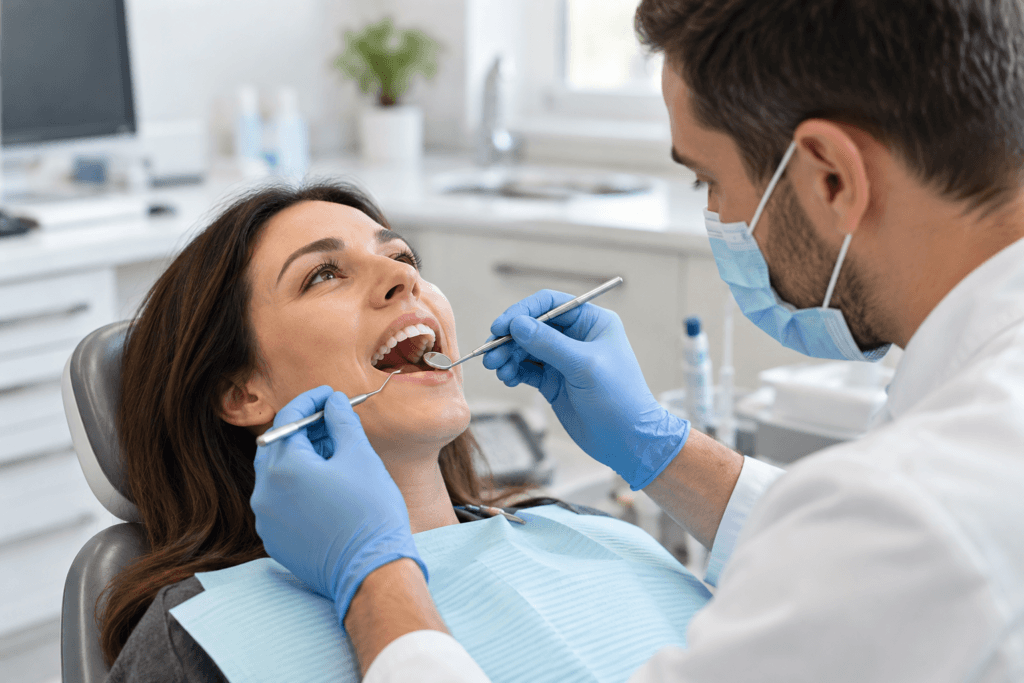
The details vary by patient, but an exam may include a review of your medical history, medications, teeth, gums, bite, existing restorations and the soft tissues of your mouth. X-rays may be recommended when clinically appropriate based on your history and examination findings.
Your dentist may also discuss your brushing and flossing routine, whether you are experiencing sensitivity or discomfort, and whether any habits such as teeth grinding, smoking or frequent snacking are affecting your oral health.
You do not need to wait until you have a major concern to bring up a question. It can be helpful to mention any changes you have noticed, even if they seem small. Examples include:
- A tooth that feels sensitive when you drink something cold
- Gums that bleed in one particular area
- A filling, crown or denture that feels different
- Jaw clicking, clenching or morning jaw soreness
- Food getting stuck between the same teeth
- Difficulty cleaning around braces, implants or bridges
These details can help your dentist determine whether further assessment or a change to your recall schedule is appropriate.
Frequently Asked Questions About Dental Bonding
No. Six months is a common interval, but the most appropriate schedule depends on your oral-health needs and risk factors. Your dentist may recommend more frequent visits, or in some stable cases, a longer interval.
It is usually better not to wait for pain. Some dental issues may not cause symptoms early on, and an exam can help identify concerns that need attention before they become more uncomfortable or more complicated.
They are related but different. A cleaning focuses on removing plaque and tartar buildup, while an exam assesses your teeth, gums and overall oral health. They are often scheduled together, but the care you receive should reflect your individual needs.
If you are unsure, contact your dental office. Your dentist can review your history and recommend an interval that fits your current needs. If it has been a long time since your last visit, it is still worthwhile to schedule an exam rather than delaying because you are uncertain about what may be needed.
You might ask: “What factors are affecting my recommended interval?” “Is there anything I can do at home to reduce my risk?” and “What symptoms should prompt me to contact the office sooner?” Clear answers can help you understand the reason behind your schedule and take a more active role in your oral health.
Book Your Dental Exam at Revita Dentistry
Unsure how often you should get a dental exam? At Revita Dentistry, your dentist can assess your teeth and gums and recommend a schedule based on your individual needs.
Book your dental exam in Brampton and get a clear plan for your ongoing oral health.